
































Why Delhi-NCR Is Not Experiencing The Signature Winter Cold Wave in 2025
This winter, residents of Delhi-NCR have been noticing an unusual phenomenon: unlike previous years, the region has not been experiencing the characteristic cold waves that typically define December and January. Meteorologists and environmental scientists have pointed to a combination of climatic, atmospheric, and urban factors behind this anomaly.
1. Influence of Western Disturbances
Delhi-NCR’s winter weather is largely influenced by Western Disturbances, which are weather systems originating in the Mediterranean region. These systems bring cold winds, cloud cover, and precipitation that often trigger a sharp drop in temperatures.
In 2025, Western Disturbances have been weaker and fewer in number, leading to less cold air infiltration into North India. Meteorologists suggest that shifts in global wind patterns and jet streams have redirected these disturbances, reducing their intensity over the Indo-Gangetic plains.
2. Warmer Winds from the Peninsula
Another contributing factor is the increased presence of warm, dry winds from southern India and the Bay of Bengal region. These winds counteract the cold northern flows, keeping temperatures in Delhi-NCR relatively mild compared to the usual sub-zero mornings typical of the region.
3. Urban Heat Island Effect
The rapid urbanization of Delhi and surrounding cities also plays a role. Concrete structures, asphalt roads, and reduced green cover trap heat and increase local temperatures, a phenomenon known as the urban heat island effect.
While this effect is subtle, it has become more pronounced over the last decade due to expanding construction and reduced vegetation, meaning that even when cold waves strike, the city remains warmer than surrounding rural areas.
4. Global Warming and Climate Variability
Long-term climate change is also a factor. Average temperatures in northern India have been rising steadily, making cold waves less severe and shorter in duration. Scientists note that global warming is altering the traditional winter patterns, leading to irregular cold spells.
Additionally, variability in sea surface temperatures in the Indian Ocean and Arabian Sea can affect monsoon patterns and subsequent winter conditions, indirectly influencing Delhi-NCR temperatures.
5. Lack of Fog Intensifying Cold
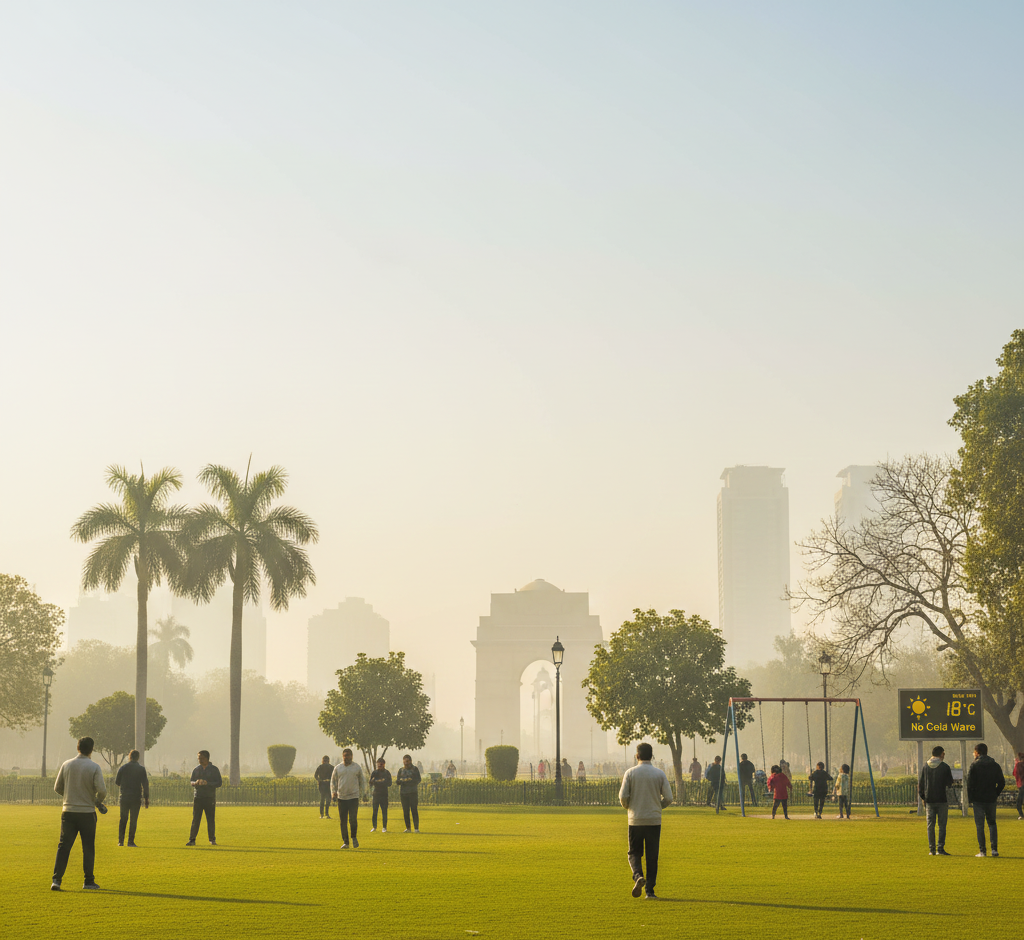
Typically, dense winter fog in Delhi-NCR magnifies the feeling of cold by reducing sunlight and trapping chilly air near the surface. This season, the region has seen lower humidity and minimal fog formation, further contributing to milder weather.
Implications for Residents
While the warmer winter may be comfortable for many, experts warn that such irregular patterns can disrupt agriculture, water supply, and energy consumption. Farmers, in particular, rely on predictable winter chill for certain crops, while energy planners depend on seasonal patterns to estimate electricity and heating needs.
Conclusion
The absence of the typical winter cold wave in Delhi-NCR in 2025 is the result of a combination of weaker Western Disturbances, warm southern winds, urban heat, global warming, and low fog incidence. Scientists emphasize that such anomalies may become more common in the future, and residents may have to adjust to milder winters interspersed with occasional cold snaps rather than prolonged cold waves.
This year’s unusual winter is a reminder of the complex interplay between local urban factors and broader climatic changes, reshaping the way North India experiences its traditional seasonal weather.