



































NASA May Have Detected Oldest Stars in the Universe Formed After the Big Bang – 2025 Discovery
In a groundbreaking development in 2025, NASA scientists may have identified some of the oldest stars ever formed in the universe, dating back to shortly after the Big Bang. This discovery could significantly enhance our understanding of the early universe, star formation, and the origins of galaxies.
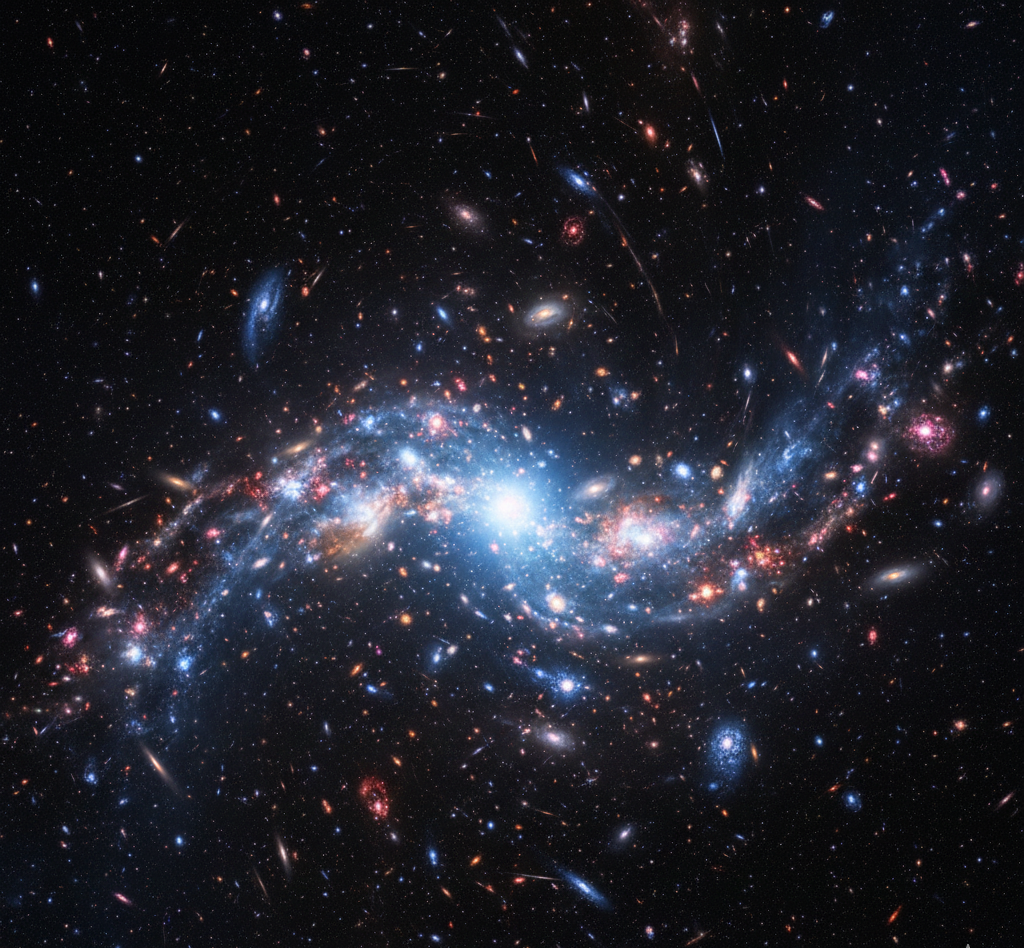
The Discovery
Astronomers using NASA’s space telescopes and advanced observational technology have detected faint signals that suggest the existence of stars that formed less than 400 million years after the Big Bang. These stars are believed to be part of the first generation of stellar objects, often referred to as Population III stars, which are primarily composed of hydrogen and helium, with virtually no heavier elements.
Scientists have long theorized about these primordial stars, but direct evidence has remained elusive due to their great distances and the dimness of their light after billions of years of cosmic expansion. According to NASA researchers, the latest observations provide some of the most compelling evidence yet of these ancient stars.
Significance of the Findings
The potential identification of these early stars carries enormous implications:
Understanding the Early Universe: These stars existed when the universe was in its infancy, helping astronomers learn about the conditions that prevailed shortly after the Big Bang.
Stellar Evolution: Observing these stars allows scientists to study the first stages of star formation and understand how heavier elements — like carbon, oxygen, and iron — were initially produced through nuclear fusion.
Galaxy Formation: The first stars played a critical role in shaping early galaxies. Their energy and supernovae explosions contributed to the reionization of the universe and influenced the formation of cosmic structures we see today.
Testing Cosmology Models: The discovery provides data to refine existing cosmological models, including predictions about the age, expansion, and composition of the universe.
The Observational Technique
NASA scientists relied on a combination of infrared observations and spectroscopy to detect the faint light signatures of these ancient stars. The method allows researchers to measure the composition, age, and redshift of distant stars, revealing how long after the Big Bang they formed.
Infrared technology is particularly useful because the light from these distant stars has been stretched into longer wavelengths due to the expansion of the universe over billions of years.
Implications for Future Research
The detection of the universe’s oldest stars opens the door to several future research avenues:
Studying Primordial Chemistry: Understanding the elemental composition of these stars will help scientists map the universe’s first chemical evolution.
Locating Other Ancient Stars: The techniques developed for this study can help identify more early stars and clusters across the cosmos.
Comparing with Theoretical Models: Observations will be compared with computer simulations to refine theories about star and galaxy formation in the early universe.
Conclusion
NASA’s potential detection of the oldest stars formed after the Big Bang represents a major milestone in astronomy and cosmology. By shedding light on the universe’s earliest stars, scientists can better understand how galaxies, planets, and eventually life itself emerged.
As telescopes and observational technology continue to improve, researchers hope to confirm these findings and uncover even more secrets from the first few hundred million years of cosmic history, giving humanity an unprecedented glimpse into the universe’s primordial past.