
































Mexico Slaps 50% Tariffs on India: $1 Billion Exports in Crosshairs
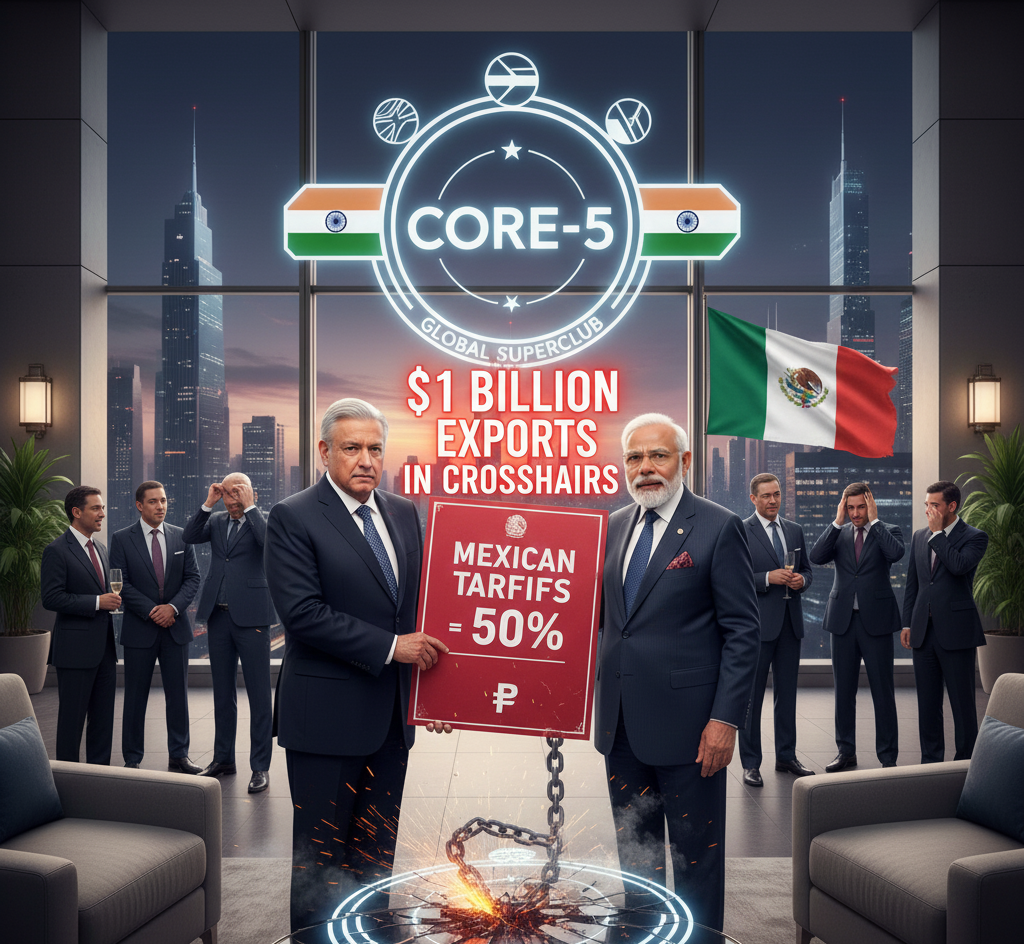
In a significant blow to India’s export sector, Mexico has announced new tariffs of up to 50% on goods from countries that do not have a free-trade agreement with it — including India. The decision is set to come into force on January 1, 2026, and is expected to hit around $1 billion worth of Indian exports, with the automobile industry facing the sharpest impact.
What Mexico Has Done
Mexico’s government has approved a sweeping tariff increase on more than 1,400 imported products. These duties will apply to nations without preferential trade arrangements with Mexico, covering India, China, South Korea, Thailand and others.
The new tariff structure ranges from 5% to 50%, depending on the product category. Mexico argues that this move will protect local industries, boost domestic production and reduce reliance on foreign imports.
Why India Is Among the Most Affected
India has built a strong trade relationship with Mexico over the years, especially in sectors such as automobiles, engineering goods, steel, electronics and textiles. Among these, automobiles are the biggest concern.
India exports nearly $1 billion worth of cars and auto components to Mexico annually, making it a crucial overseas market for Indian manufacturers. Passenger vehicles, which earlier faced lower duties, will now be taxed at close to 50%, making India-made cars far more expensive for Mexican buyers.
Major global automakers that export India-built models — including Hyundai, Nissan, Volkswagen (Skoda) and Maruti Suzuki — are expected to face immediate challenges.
Industries That Will Be Hit
While the automobile sector is the most exposed, several other Indian industries will also feel the pressure:
Auto components, due to higher input costs
Steel and engineering goods, which will become less competitive
Textiles and apparel, facing increased import duties
Electronics and machinery, which form a large segment of Indian shipments
Furniture, plastics and footwear, also included in the tariff list
Exporters fear that the price shock will reduce demand and shrink India’s share in the Mexican market.
Why Mexico Took This Step
Mexico’s tariff hike is part of a broader global shift toward protectionist trade policies. The country says the goal is to strengthen its domestic industry, support local jobs and reduce dependence on low-cost imports.
The decision also comes months after the United States imposed its own tariff increases on India and several other nations. Some analysts believe Mexico’s move may be aligned with regional economic strategies and North American supply-chain politics.
Possible Next Steps for India
With a major export market under pressure, India is expected to:
Ramp up diplomatic engagement with Mexico
Seek tariff relief through negotiations
Push for long-pending trade agreements with Latin American nations
Encourage Indian companies to explore local production in Mexico
Diversify export destinations to reduce risk
Industry bodies have already warned that without policy changes, India’s competitiveness in the Mexican market could decline sharply.
Conclusion
Mexico’s 50% tariff decision marks a major development in global trade dynamics. For India, the move threatens nearly $1 billion worth of exports, led by the crucial automobile sector. While negotiations may soften the blow, the tariff shift highlights the need for India to expand its trade partnerships, strengthen resilience and adapt to an increasingly protectionist world economy.