



































Cyclone Ditwah: India Helps Sri Lanka in Rescue Efforts as Death Toll Crosses 200
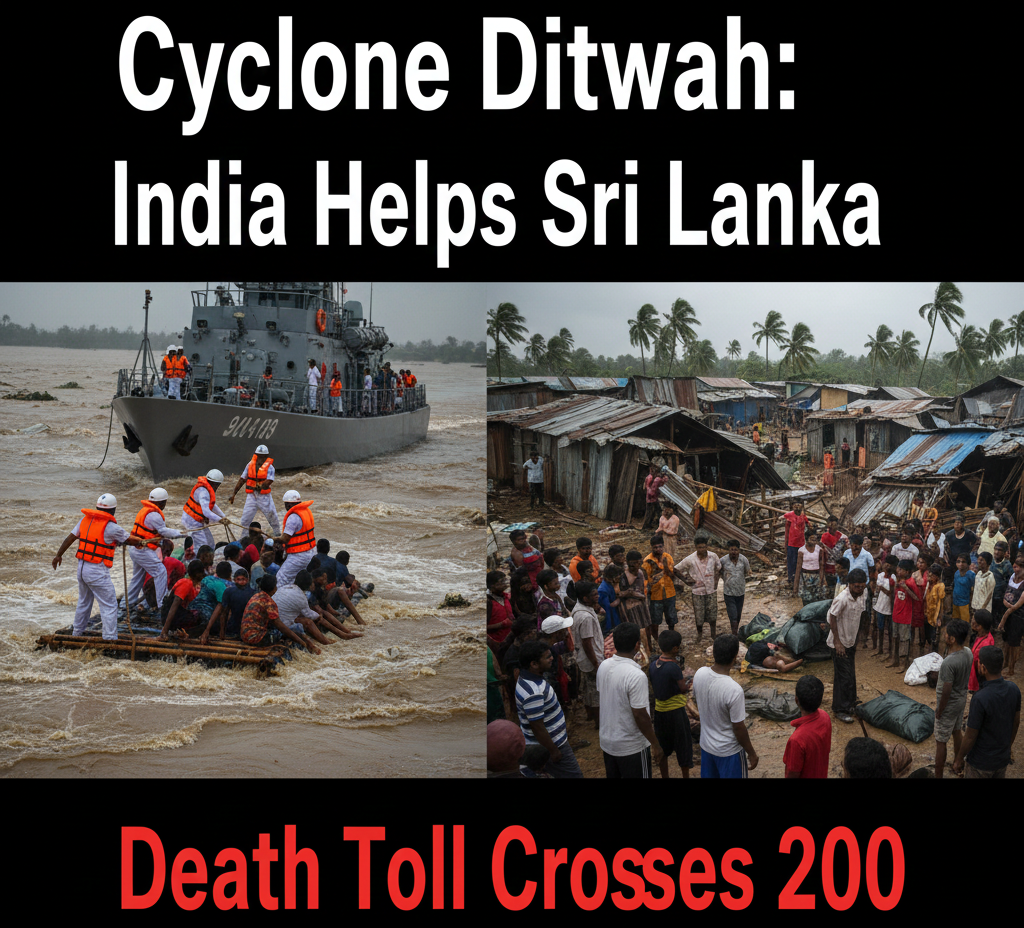
In one of the most devastating natural disasters of 2025, Cyclone Ditwah has left widespread destruction across Sri Lanka, with the death toll rising beyond 200 and thousands more displaced. As rescue operations enter a critical phase, India has stepped in with urgent humanitarian assistance, reinforcing regional cooperation during crisis.
A Cyclone of Unprecedented Intensity
Cyclone Ditwah made landfall on Sri Lanka’s eastern coast with exceptional force, bringing torrential rains, flash floods, and winds strong enough to uproot entire settlements. The cyclone’s severity overwhelmed local disaster-response systems, prompting immediate calls for international support.
Key Impacts Reported:
Extensive flooding in coastal and low-lying regions
Severe damage to homes, schools, and public infrastructure
Power outages across multiple districts
Disruption of communication networks
Thousands seeking shelter in relief camps
Authorities warn that the death toll may rise further as rescue teams reach remote areas.
India Steps In: Quick and Coordinated Support
Responding promptly to Sri Lanka’s request for assistance, India dispatched naval vessels, aircraft, and specialized NDRF (National Disaster Response Force) teams to support ongoing operations. Humanitarian supplies, including food packets, medicines, tents, water purifiers, and emergency power units, have already been delivered.
India’s Assistance Includes:
Rescue boats and trained personnel deployed in flood-hit districts
Medical teams equipped to treat trauma, injuries, and waterborne diseases
Helicopters and transport aircraft delivering essential supplies
Engineers helping restore power and rebuild damaged infrastructure
Officials from both countries emphasized that cooperation remains vital as more survivors are located.
Sri Lanka’s Ongoing Struggle
The Sri Lankan government has declared a national emergency, with multiple provinces still under red alert due to the threat of further rainfall. Local authorities, volunteers, and relief organizations are working around the clock to provide shelter, food, and medical care.
Challenges include:
Shortage of clean drinking water
Overcrowded relief centers
Damage to major road networks
Risk of landslides in hilly regions
International aid groups have also begun mobilizing resources to support the affected communities.
Regional Cooperation Strengthened in 2025
The response to Cyclone Ditwah underscores the growing importance of regional solidarity in South Asia’s climate-vulnerable environment, especially as extreme weather events become more frequent in 2025. India’s swift assistance has been widely acknowledged, reinforcing long-standing ties and mutual support mechanisms between the neighboring nations.
The Road Ahead
With the cyclone now dissipated, Sri Lanka faces a long and difficult recovery. Priority efforts include:
Restoring electricity and communication lines
Rebuilding homes and public facilities
Providing long-term rehabilitation for displaced families
Preventing post-disaster disease outbreaks
Strengthening climate-resilient infrastructure
Experts note that Cyclone Ditwah is another reminder of the urgent need for improved disaster preparedness across the region.