

































How Trump Plans To Retain Indian Students In US With His New Gold Card (2025)
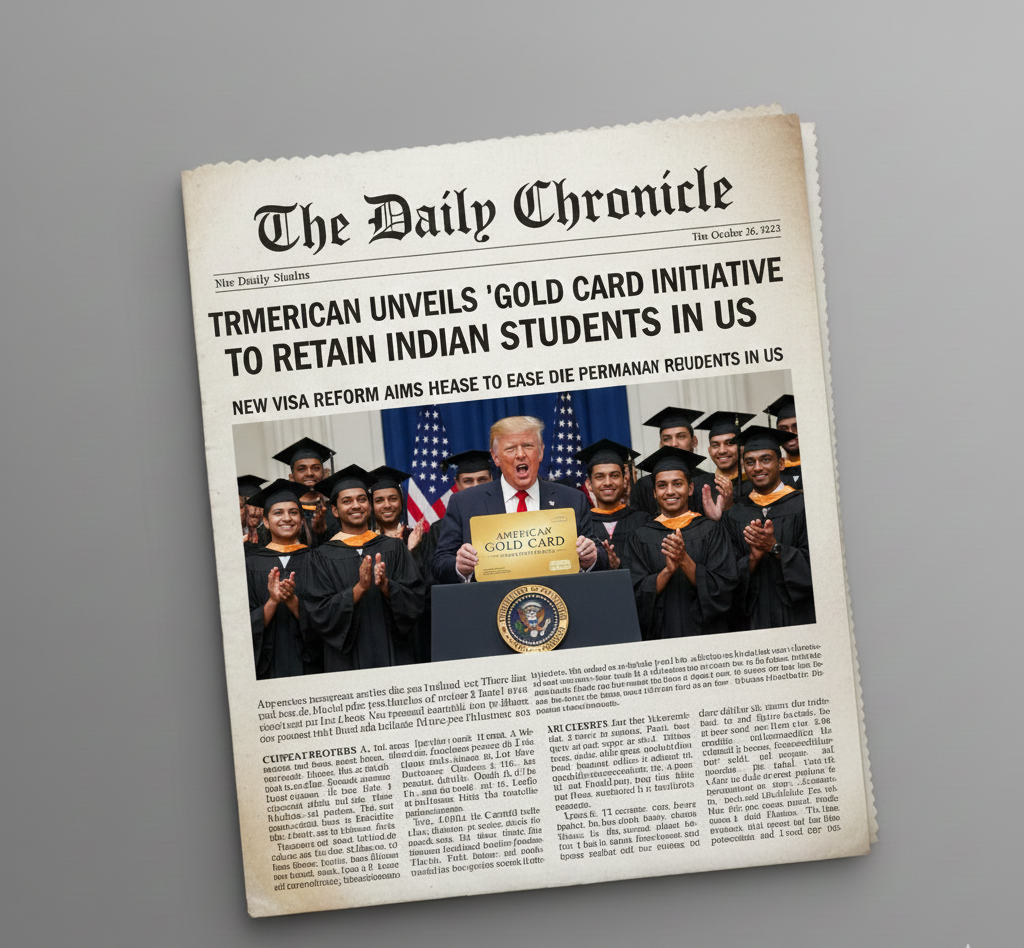
In 2025, former US President Donald Trump announced a major shift in America’s immigration strategy through the introduction of the “Gold Card” — a fast-track residency option aimed at keeping top foreign talent in the United States. Among the biggest beneficiaries of this move are expected to be Indian students, who make up the largest group of international students in American universities.
Trump has repeatedly argued that the US invests heavily in educating brilliant foreign students but then forces them to return home due to restrictive visa rules. The Gold Card is designed to end that cycle and ensure that the brightest minds, especially in STEM fields, stay back to contribute to the US economy.
What Is the Gold Card?
The Gold Card is essentially a premium path to permanent residency, offering faster processing and long-term stability. It is positioned as “better and more powerful than a green card,” according to Trump, because it aims to provide:
A straightforward route to live and work in the US permanently
Greater flexibility than H-1B visas
A more secure residency status for high-skilled individuals
A simplified pathway that avoids long waiting lines faced by Indians in traditional green card categories
The programme includes two routes:
Individual applicants who meet high-talent or high-investment criteria
Corporate-sponsored Gold Cards, where US companies pay to retain foreign graduates they want to hire
Why Indian Students Are the Focus
Indian students have long been at the heart of US technological and scientific innovation. They dominate American campuses in engineering, computer science, business, research, and medical fields.
Yet after graduation, many face:
H-1B lottery uncertainty
Temporary visa limits
Long green-card backlogs that can stretch for decades
Trump and his advisers argue that the current system pushes this highly skilled talent out of the US, weakening American companies and strengthening global competitors. The Gold Card aims to stop this talent drain by giving Indian students a clear and reliable reason to stay.
How the Gold Card Helps Indian Students
1. Faster Route to Permanent Residency
Instead of waiting years or entering unpredictable lotteries, graduates can secure long-term residency much more quickly.
2. Freedom from Employer Dependency
Unlike H-1B visas, the Gold Card is not tied tightly to one employer. Students can switch jobs, start businesses, or innovate freely.
3. Long-Term Stability
Permanent residency provides confidence to plan a career, buy a home, and contribute to the US economy without fear of visa expiry.
4. Encourages US Companies to Hire Indian Graduates
Through the corporate sponsorship pathway, companies can directly secure residency for talented workers they want to retain.
Why the US Wants to Retain Indian Talent
Trump’s new strategy is based on two major goals:
Economic Competitiveness
US tech giants, research labs, and engineering firms rely heavily on Indian graduates. Losing them to countries like Canada, UK, Germany, and Australia has increasingly become a concern.
Innovation and Global Leadership
Indian students are among the top contributors to patents, startups, AI research, medical technology, and advanced computing in the US. Retaining them strengthens America’s global dominance in key sectors.
Criticisms and Concerns
Even though the Gold Card has generated excitement, it also faces criticism:
High cost barriers may make it accessible mainly to wealthy applicants
Legal questions exist about whether such a programme can bypass Congress
Some view it as favouring elites over ordinary international graduates
Critics argue that Trump’s other visa restrictions may offset the benefits
Still, supporters maintain that the Gold Card will boost American innovation and keep the US ahead in global competition.
Conclusion
The Trump Gold Card (2025) marks a dramatic change in the United States’ approach to immigration and talent retention. By offering Indian students a stable, fast, and attractive path to permanent residency, the plan aims to stop the brain-drain and keep the world’s best minds within American borders.