





























India-US Trade Deal Soon? S. Jaishankar’s “Extremely Judicious” Response | 2025 Article
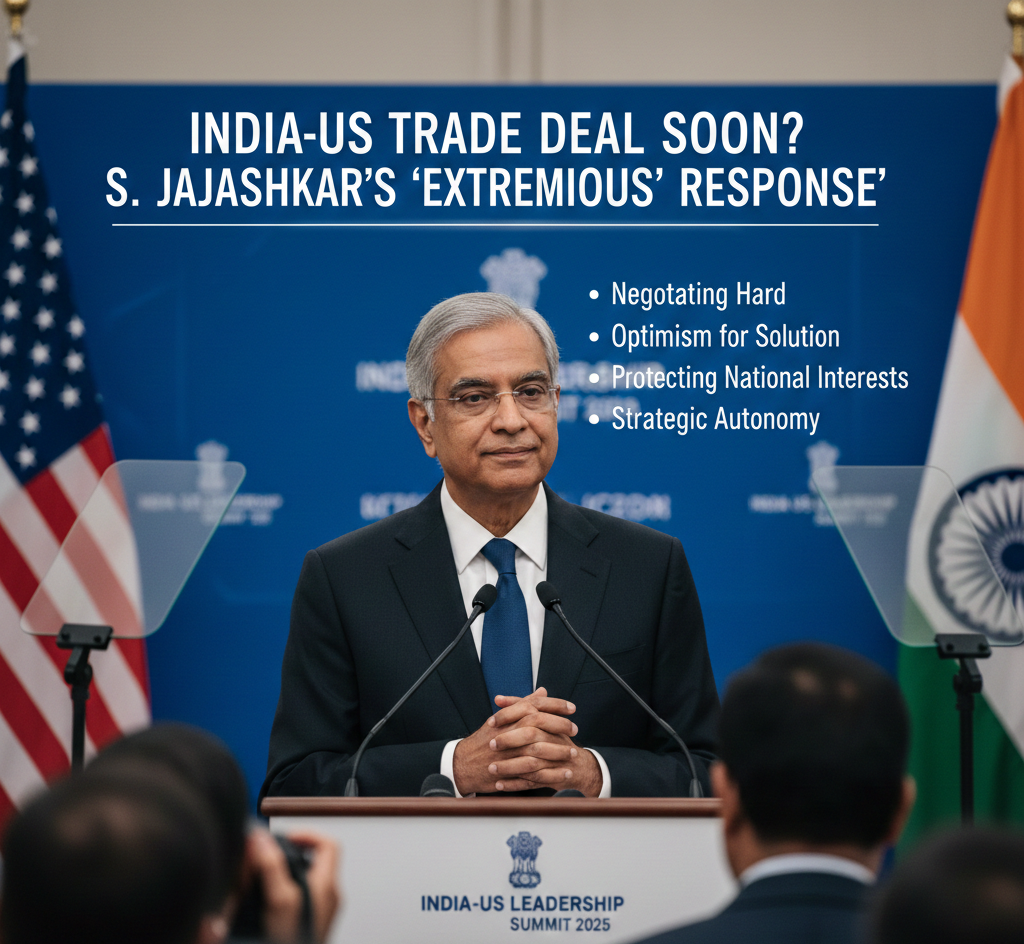
With global economic dynamics shifting rapidly in 2025, all eyes are on whether India and the United States will move toward a comprehensive trade deal. When asked about the possibility, External Affairs Minister S. Jaishankar offered an “extremely judicious” and carefully calibrated response—one that reflects both strategic caution and diplomatic maturity.
Jaishankar did not commit to timelines or sweeping promises, but he signaled that India values the partnership while remaining realistic about the complexities involved.
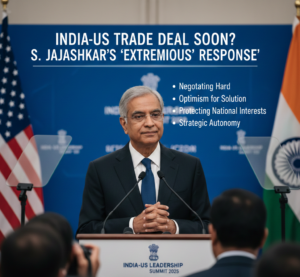
A Balanced and Calculated Diplomacy
Jaishankar’s response highlighted India’s approach to international trade negotiations:
Avoid overpromising
Prioritise national interest
Move only when both nations are aligned
Maintain flexibility in evolving situations
In 2025, trade partnerships are not just economic arrangements—they are strategic tools shaped by technology, supply chains, and geopolitics.
India-US Trade Relations: A Strong Foundation, But…
The India-US relationship is among the strongest it has ever been, marked by:
Defense cooperation
Technology collaboration
Semiconductor investments
Growing people-to-people ties
Shared concerns about global stability
Yet a formal comprehensive trade deal has remained elusive due to differing interests in:
Market access
Intellectual property
Digital regulation
Agricultural exports
Tariff structures
Jaishankar’s cautious tone suggests that both nations want progress but prefer steady, issue-based advancements over one sweeping agreement.
Why Jaishankar Chose an “Extremely Judicious” Response
In 2025, the global economic environment is turbulent:
Trade blocs are shifting
Supply chains are being rebuilt
Countries are prioritizing self-reliance
Technology controls are becoming more stringent
A trade deal between two large economies like India and the US requires careful navigation.
Jaishankar’s message: Don’t expect overnight breakthroughs—but expect continuous progress.
Incremental Gains Over Grand Announcements
Instead of a single trade treaty, India and the US are currently focusing on:
1. Sector-Specific Collaboration
Semiconductors, critical minerals, and digital technology remain top priorities.
2. Investment-Friendly Policies
Both nations are encouraging companies to diversify supply chains, especially away from China.
3. Tariff Adjustments
Issue-based negotiations on products like apples, almonds, steel, and pharmaceuticals continue to evolve.
4. Strategic Technology Partnership
This remains the cornerstone of relations in 2025, with cooperation in AI, cybersecurity, and space.
What a Possible Deal Might Look Like in 2025
India and the US may eventually prefer a “mini-deal” framework rather than a mega agreement. This may include:
Reduced tariffs on select goods
Stronger digital trade guidelines
Expanded technology sharing
Better dispute-resolution mechanisms
More predictable market access for businesses
Such modular agreements align with Jaishankar’s cautious—but optimistic—tone.
Conclusion
S. Jaishankar’s “extremely judicious” response is a reminder that India will not rush into any trade agreement without ensuring that it aligns with long-term national interests.
In 2025, India-US ties remain strong, strategic, and forward-looking—but a full-fledged trade deal will likely emerge only when both sides are fully aligned on the fine print.
Until then, steady, incremental progress—not dramatic announcements—will define the India-US economic relationship.