


































Bengaluru Woman Groped, Slapped For Rejecting “Instagram Friend’s” Advances
A disturbing incident from Bengaluru has sparked outrage and renewed conversations about women’s safety and online interactions, after a young woman was reportedly groped and slapped by a man she had initially become acquainted with through Instagram. The attack, which took place after she rejected his advances, has once again highlighted concerns surrounding trust in digital friendships and the increasing number of harassment cases linked to social-media interactions.
Incident Began As Online Friendship
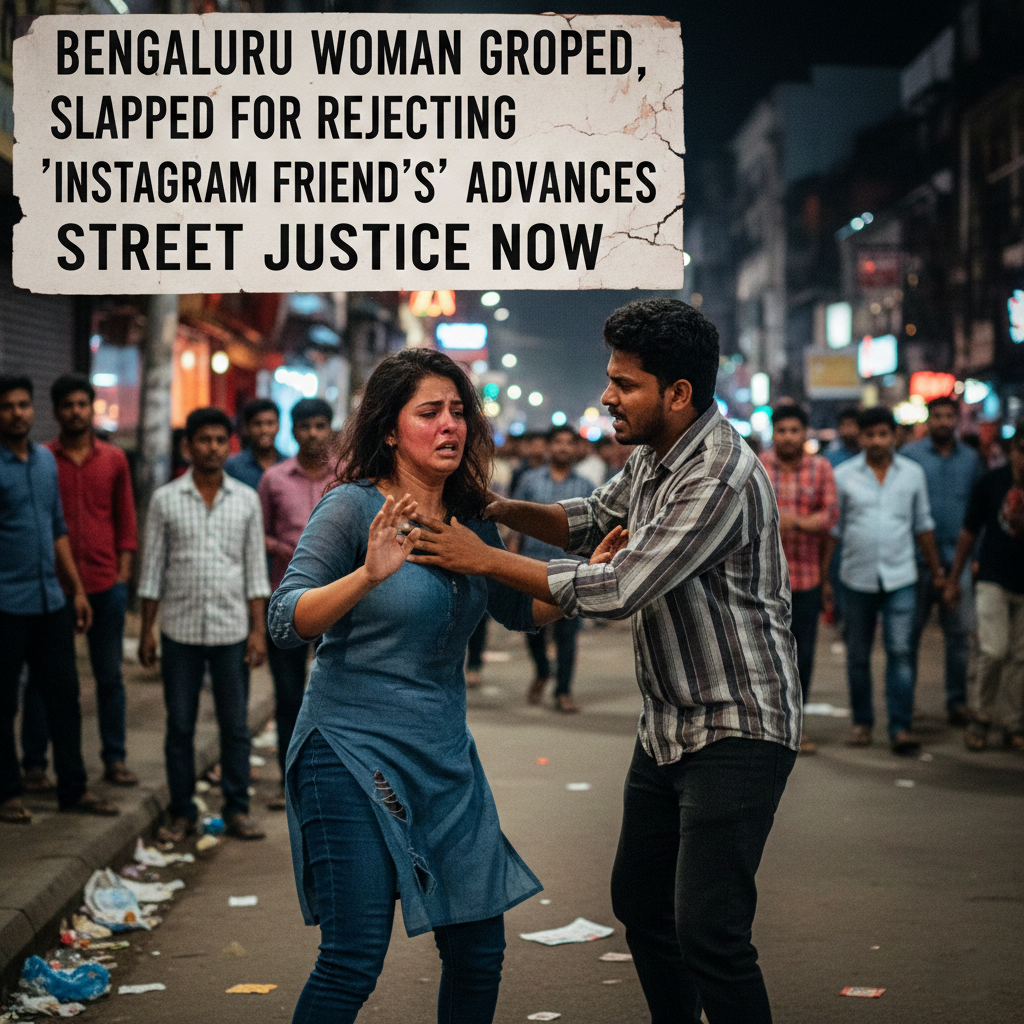
According to preliminary details, the woman and the accused had first connected on Instagram, where casual conversation gradually developed into offline meetings. However, when she reportedly chose to distance herself and decline further personal involvement, the man reacted violently during a later encounter.
Witness accounts and initial reports indicate that he attempted to force physical proximity, and when the woman resisted, he allegedly groped and slapped her. The shaken victim raised an alarm soon after, and the matter was escalated to local authorities.
Police Action And Legal Proceedings
Following the complaint, the police have launched an investigation and identified the accused. Statements are being recorded, and relevant sections related to assault, outraging the modesty of a woman, and harassment are expected to be invoked.
Officials have reiterated that cases involving harassment and physical assault—especially those enabled through digital connections—will be treated with seriousness. Investigators are also examining chat histories and communication records to establish the chain of events leading to the assault.
A Stark Reminder Of Safety Risks In Online Connections
The incident has revived debate around the risks associated with meeting strangers introduced through social platforms. Experts emphasize that while social networks have expanded avenues for communication, they have also increased vulnerability to manipulation, stalking, and emotional coercion.
Women’s rights advocates point out that a recurring pattern in such cases involves entitlement-driven aggression, where rejection leads to violent behaviour. They stress that refusal must be respected and that “no” is never an invitation for confrontation or physical intimidation.
Public Response And Growing Concern
News of the attack has triggered widespread condemnation, with many social-media users expressing support for the survivor and demanding swift legal action. Several voices have called for stronger awareness around safe-meetup practices, background verification, and caution during early stages of online-to-offline interactions.
Urban safety groups argue that harassment in public and semi-private spaces continues to be under-reported, often due to fear of judgement or social backlash. Cases such as this, they say, underline the importance of speaking out and seeking timely help.
Support Systems And Resources
Counsellors and safety advocates urge survivors of harassment or assault to report incidents promptly, seek emotional support, and avoid self-blame. Helplines, women’s cells, and community-support networks remain key mechanisms for protection and redressal.
They also highlight the importance of bystander awareness, encouraging people in public spaces to intervene safely or alert authorities when witnessing abuse.
A Broader Call For Accountability
As investigations progress, the case stands as yet another reminder that entitlement-based aggression and digital-age harassment must be addressed through stronger community awareness, legal deterrence, and behavioural change.
The survivor’s decision to report the assault is being seen as a significant step toward accountability—one that reinforces the message that intimidation, stalking, or violence in the name of “friendship” will not be tolerated.