































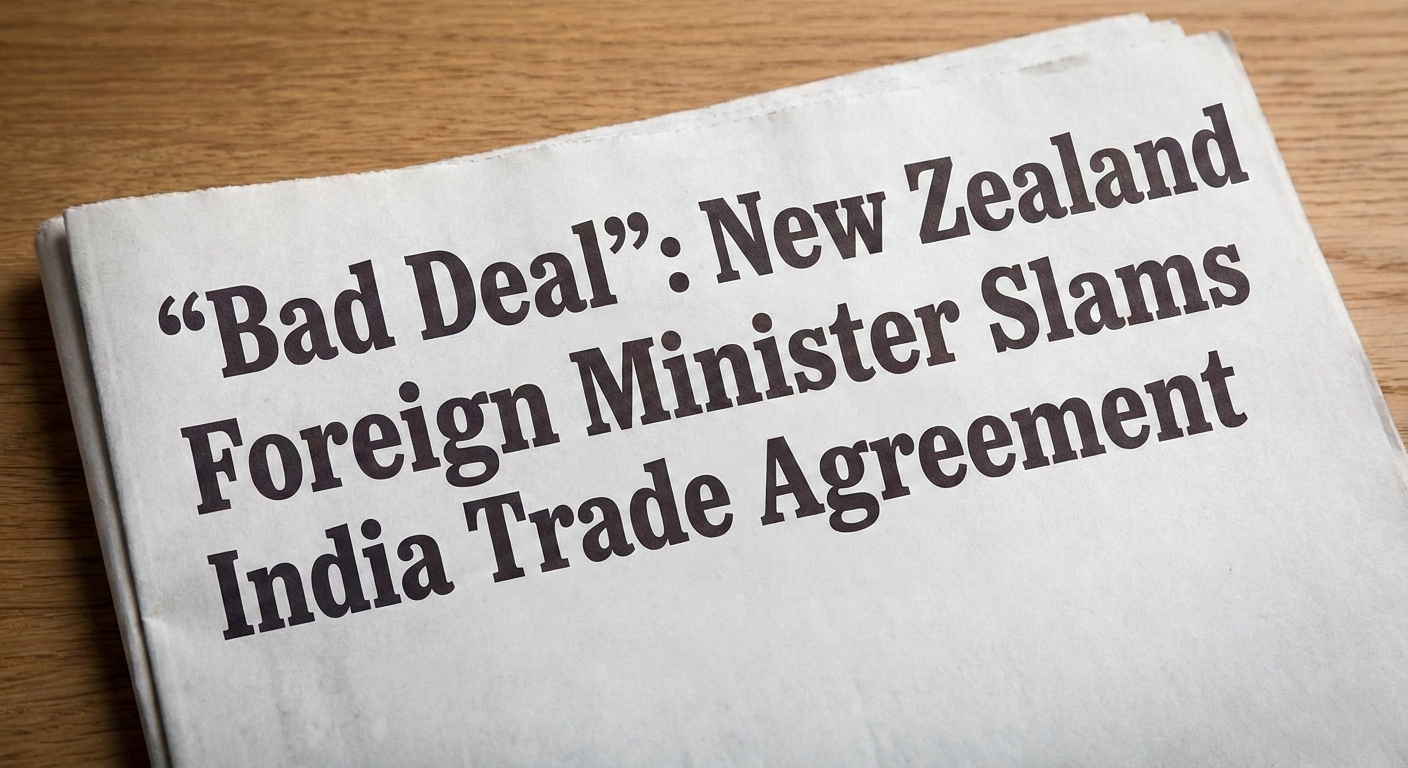
“Bad Deal”: New Zealand Foreign Minister Slams India Trade Agreement
Introduction
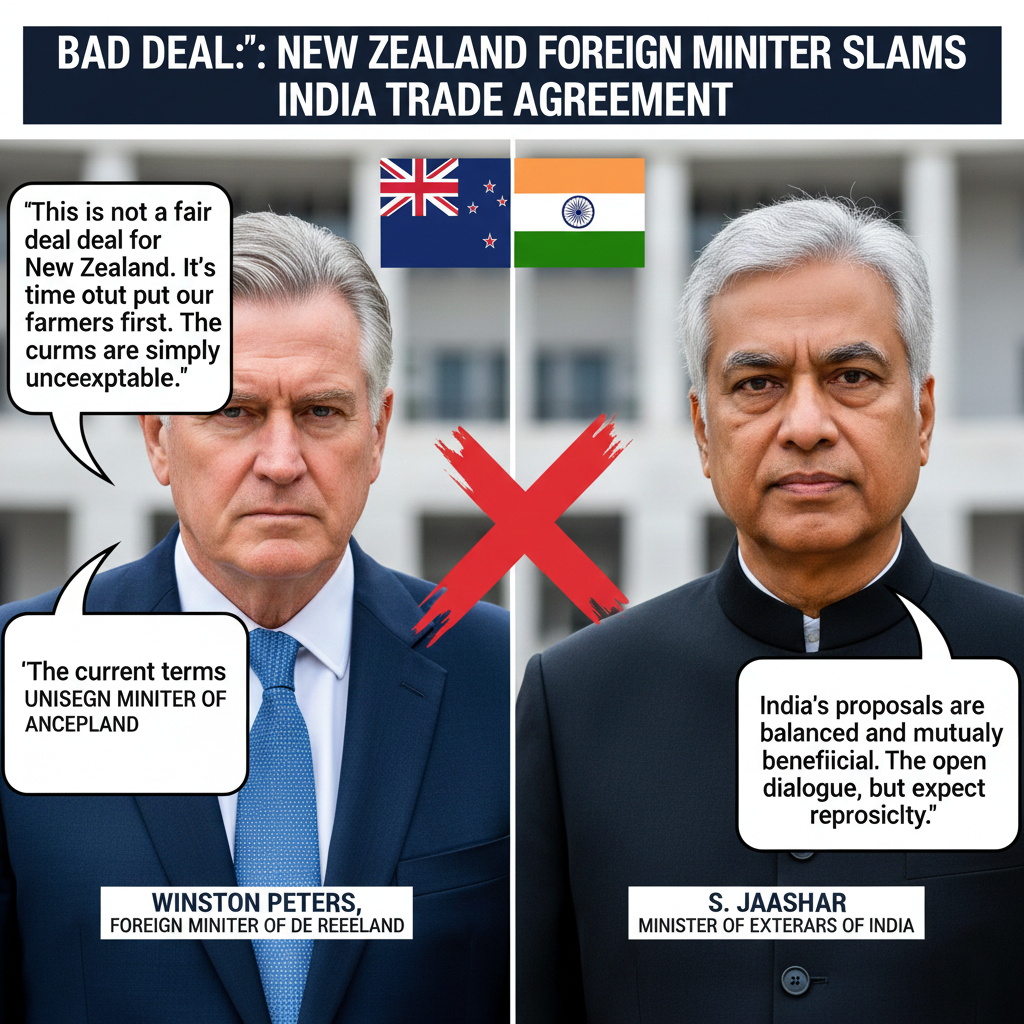
India–New Zealand trade relations have come under renewed focus after New Zealand’s Foreign Minister publicly termed a proposed trade agreement with India a “bad deal.”
The statement has triggered political, economic, and diplomatic discussions, highlighting unresolved issues in long-running trade negotiations.
As both nations prepare for shifting global trade dynamics in 2025, the remarks have added urgency to reassessing bilateral economic ties.
Background of India–New Zealand Trade Talks
India and New Zealand have been negotiating a comprehensive trade agreement for several years.
The objective has been to enhance cooperation in goods, services, education, technology, and investment.
Despite multiple negotiation rounds, progress has remained limited due to contrasting economic structures and priorities.
New Zealand’s export-driven economy focuses heavily on agriculture, while India prioritizes domestic employment and farmer protection.
Why New Zealand Called It a “Bad Deal”
New Zealand officials believe the proposed agreement does not provide sufficient market access to India.
Key concerns include:
High tariffs on dairy and agricultural products
Regulatory barriers limiting entry for New Zealand exporters
Lack of concrete timelines for easing trade restrictions
From Wellington’s perspective, the imbalance in benefits makes the agreement economically unattractive.
India’s Stand on the Trade Agreement
India has maintained a cautious approach, particularly in sensitive sectors such as agriculture and dairy.
The government argues that:
Millions of Indian farmers depend on protected domestic markets
Rapid trade liberalization could destabilize rural livelihoods
Trade deals must align with long-term national interests, not short-term gains
India has instead proposed deeper cooperation in services, IT, pharmaceuticals, and skilled workforce mobility.
Political and Diplomatic Reactions
The foreign minister’s remarks have sparked debate within diplomatic circles.
Indian officials have responded by reaffirming their commitment to dialogue while rejecting pressure-based negotiations.
Analysts suggest the statement may be a strategic move to reset talks rather than abandon them completely.
Both countries continue to engage through diplomatic channels despite public criticism.
Impact on Bilateral Relations
The “bad deal” comment risks creating short-term diplomatic friction.
However, India and New Zealand share broader strategic interests, including:
Indo-Pacific stability
Supply chain resilience
Educational and cultural exchanges
Experts believe neither country is likely to sever ties, but negotiations may slow further.
Global Trade Context in 2025
The disagreement reflects wider global trade challenges as nations rethink free trade agreements.
Protectionism, food security, and domestic economic stability are becoming central policy themes worldwide.
India’s stance mirrors a broader trend of balancing globalization with self-reliance.
New Zealand, meanwhile, is seeking stronger trade assurances amid growing global competition.
What Lies Ahead
The future of the India–New Zealand trade agreement remains uncertain.
Possible outcomes include:
Renegotiation with revised expectations
Sector-specific agreements instead of a comprehensive pact
Continued delays due to unresolved differences
The willingness of both sides to compromise will shape the next phase of talks.
Conclusion
The New Zealand Foreign Minister’s “bad deal” remark has brought long-standing trade tensions into public view.
While disagreements persist, both nations recognize the strategic value of continued engagement.
As 2025 approaches, the challenge lies in finding common ground that balances economic ambition with domestic priorities.
The coming months will determine whether the trade relationship evolves or remains at a crossroads.