































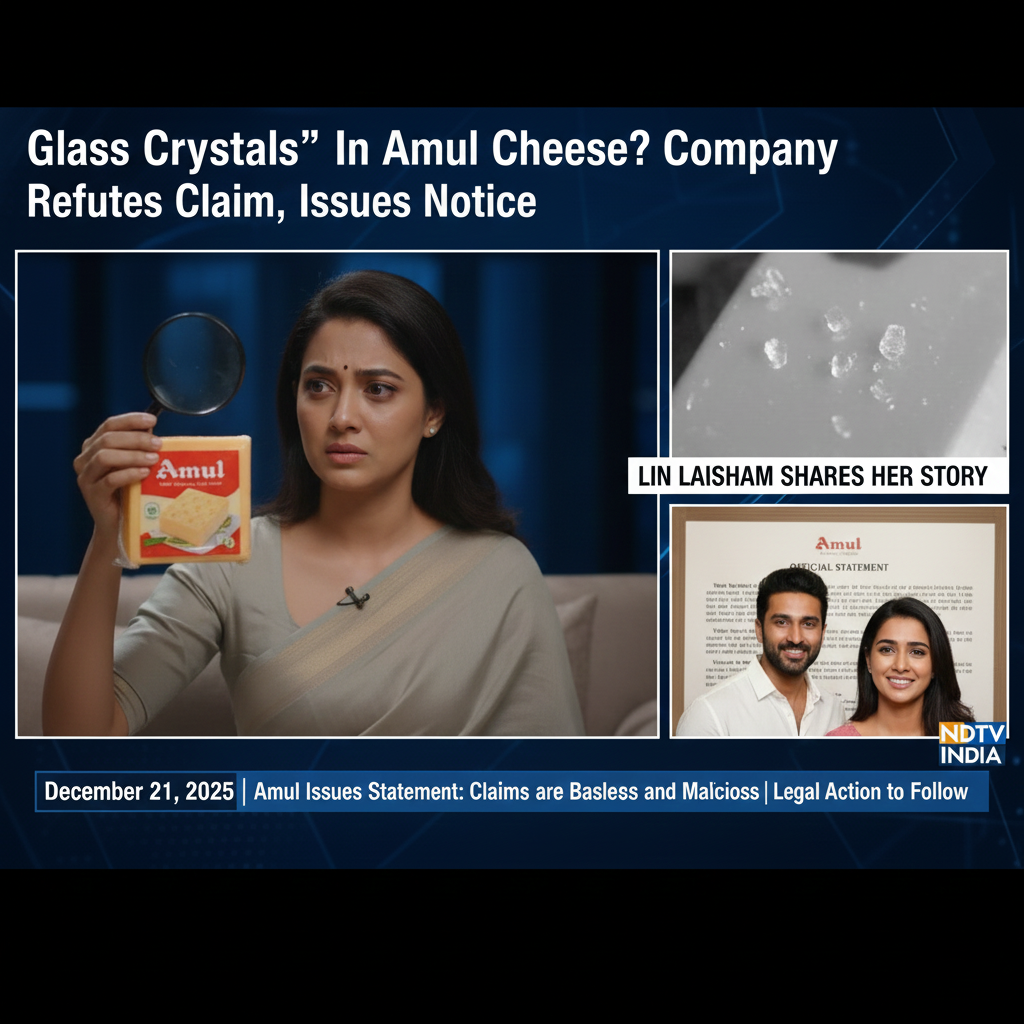
Glass Crystals” in Amul Cheese? Company Refutes Claim, Issues Warning
A recent claim circulating on social media alleging the presence of “glass crystals” in Amul cheese has sparked concern among consumers. However, Amul, one of India’s leading dairy brands, has categorically refuted the claim, calling it false and misleading. The company also issued a wrist-slap warning to those spreading misinformation, emphasizing its commitment to food safety and quality.
The Social Media Claim
The controversy began when a viral post alleged that some Amul cheese packets contained glass-like crystals, causing panic among consumers. Images shared online purportedly showed small white crystals embedded in the cheese, which many interpreted as potentially harmful. The post quickly gained traction, raising questions about product safety and quality control in one of India’s most trusted dairy brands.
Amul’s Response
Amul swiftly addressed the claim, stating that the so-called “glass crystals” are completely harmless and naturally occurring components of processed cheese. According to the company, these crystals are calcium lactate crystals, which are common in aged or processed cheeses and pose no health risk.
The company also clarified that rigorous quality control measures are in place at every stage of production, ensuring that all Amul products meet strict food safety standards. Amul urged consumers to verify facts before sharing information online, warning against the spread of unverified and misleading claims that could damage public trust.
Warning Against Misinformation
In addition to clarifying the science behind the crystals, Amul issued a warning to individuals and platforms spreading misinformation. The company emphasized that such false claims could have serious legal and reputational consequences and called on the public to exercise caution before believing or sharing unverified content.
Experts Explain the Phenomenon
Food experts explain that calcium lactate crystals often form in cheese due to natural interactions between calcium and lactic acid. These crystals are generally safe, adding a slight crunch but no harm. Similar formations are observed in many hard and semi-hard cheeses worldwide, reinforcing that this is a normal, natural occurrence in dairy products.
Consumer Reassurance
Amul’s prompt clarification appears to have reassured consumers, with many appreciating the transparency and quick response. Experts recommend that when encountering unusual textures or appearances in packaged food, consumers should check with official company statements or food safety authorities rather than relying solely on social media posts.
Conclusion
The “glass crystals” controversy surrounding Amul cheese highlights the impact of misinformation in the digital age. While social media can rapidly spread concern, scientific clarification and transparency remain key to maintaining consumer trust. Amul’s swift response and explanation reinforce that its products continue to meet high standards of safety and quality in 2025.