






























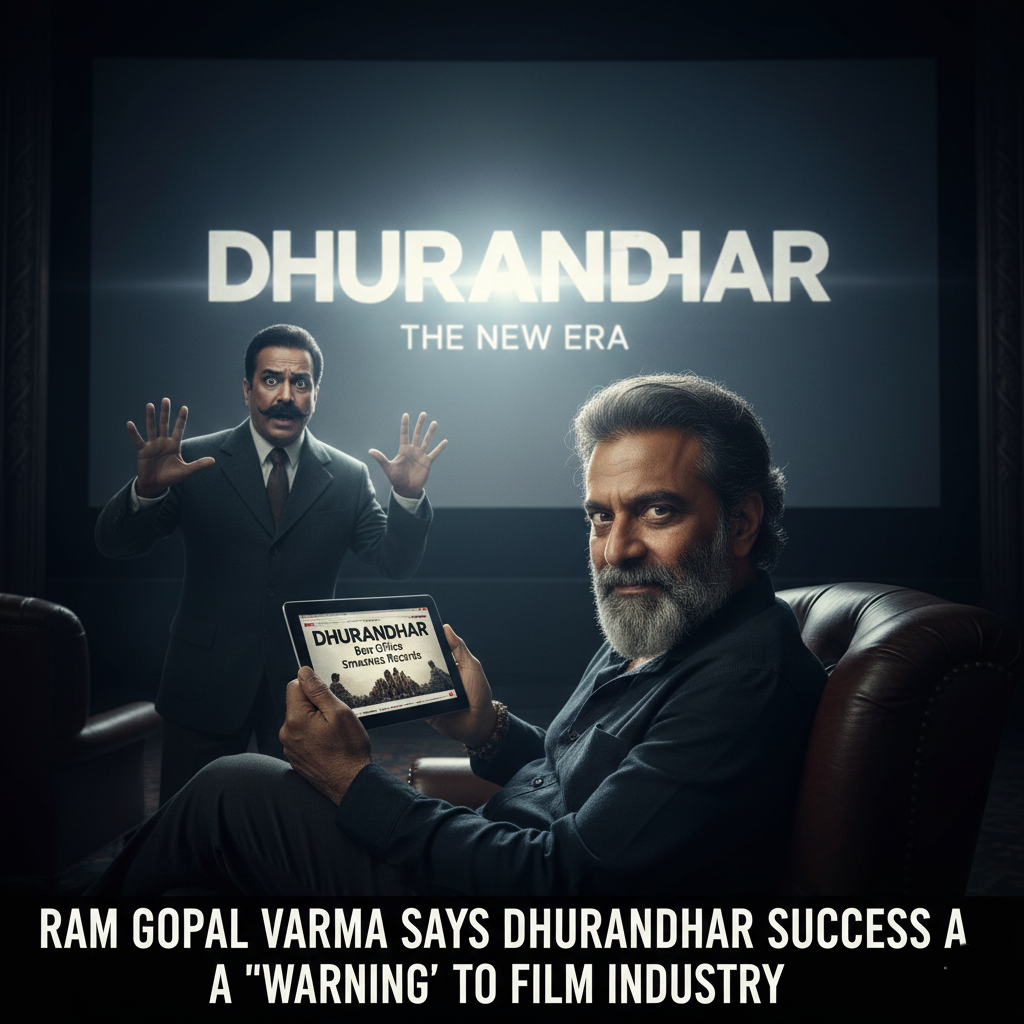
Ram Gopal Varma Says Dhurandhar Success a “Warning” to the Film Industry
Filmmaker Ram Gopal Varma has weighed in on the success of Dhurandhar, calling it a “warning” to the Indian film industry. Known for his blunt opinions and unfiltered takes, Varma’s remarks have sparked fresh debate about changing audience tastes, storytelling priorities, and the future direction of mainstream cinema.
According to Varma, the film’s strong response is not just a box office achievement but a clear signal that audiences are no longer impressed by formula-driven cinema.
RGV’s Strong Message to Bollywood
Ram Gopal Varma suggested that Dhurandhar’s success exposes the growing disconnect between filmmakers and audiences. He argued that viewers today are far more discerning and are drawn to authenticity, conviction, and intensity rather than star power alone.
Calling the film’s performance a “warning,” Varma implied that the industry must rethink its creative complacency or risk losing relevance.
What Makes Dhurandhar Different
Varma pointed out that Dhurandhar succeeded because it stayed true to its core vision. The film’s raw storytelling, grounded characters, and unapologetic tone resonated with audiences tired of predictable plots and exaggerated spectacle.
Instead of relying on glamour or gimmicks, the film focused on emotion, conflict, and cultural depth — elements that Varma believes are often sidelined in favour of mass appeal formulas.
Audiences Have Changed
The filmmaker stressed that today’s audience is exposed to global cinema and high-quality content across streaming platforms. As a result, viewers can easily identify superficial storytelling.
Varma said that Dhurandhar proves audiences will reward sincerity and originality, even if a film defies conventional commercial expectations.
A Reality Check for Star-Driven Films
RGV’s comments also hinted at the declining guarantee of stardom. He argued that star casts and massive budgets no longer ensure success unless backed by strong writing and direction.
In his view, Dhurandhar shows that powerful performances and storytelling can outweigh marketing hype.
Industry Reaction and Debate
Varma’s statement quickly drew attention across social media and film circles. While some agreed that the film’s success marks a creative shift, others felt the industry has always evolved and that such moments are part of a natural cycle.
Supporters of Varma’s view say the message is timely, especially as several big-budget films struggle to meet expectations despite heavy promotion.
Lessons for Filmmakers
According to Varma, the biggest takeaway from Dhurandhar is the importance of trusting the story. He emphasized that filmmakers should focus less on trends and more on honesty in storytelling.
He also urged producers to support bold narratives rather than chasing safe, repetitive formulas.
A Cultural Moment Beyond Box Office
Varma noted that Dhurandhar has sparked conversations beyond cinema, entering popular culture through its music, characters, and themes. He sees this as proof that films with cultural roots and emotional weight leave a longer-lasting impact.
RGV’s Consistent Stand
This stance aligns with Ram Gopal Varma’s long-held belief that cinema must evolve or risk stagnation. Over the years, he has repeatedly criticised herd mentality in filmmaking and advocated for innovation, even at the cost of commercial comfort.
Conclusion
Ram Gopal Varma’s statement that Dhurandhar’s success is a “warning” reflects a broader truth about the current state of the film industry. The film’s performance suggests that audiences are demanding more honesty, depth, and originality from cinema.
Whether the industry takes this as constructive criticism or dismisses it as another provocative remark remains to be seen. But one thing is clear — Dhurandhar has reignited an important conversation about where Indian cinema is headed and what audiences truly want.