















X User Analyses Shashi Tharoor vs Rahul Gandhi Ideology Clash, He Responds
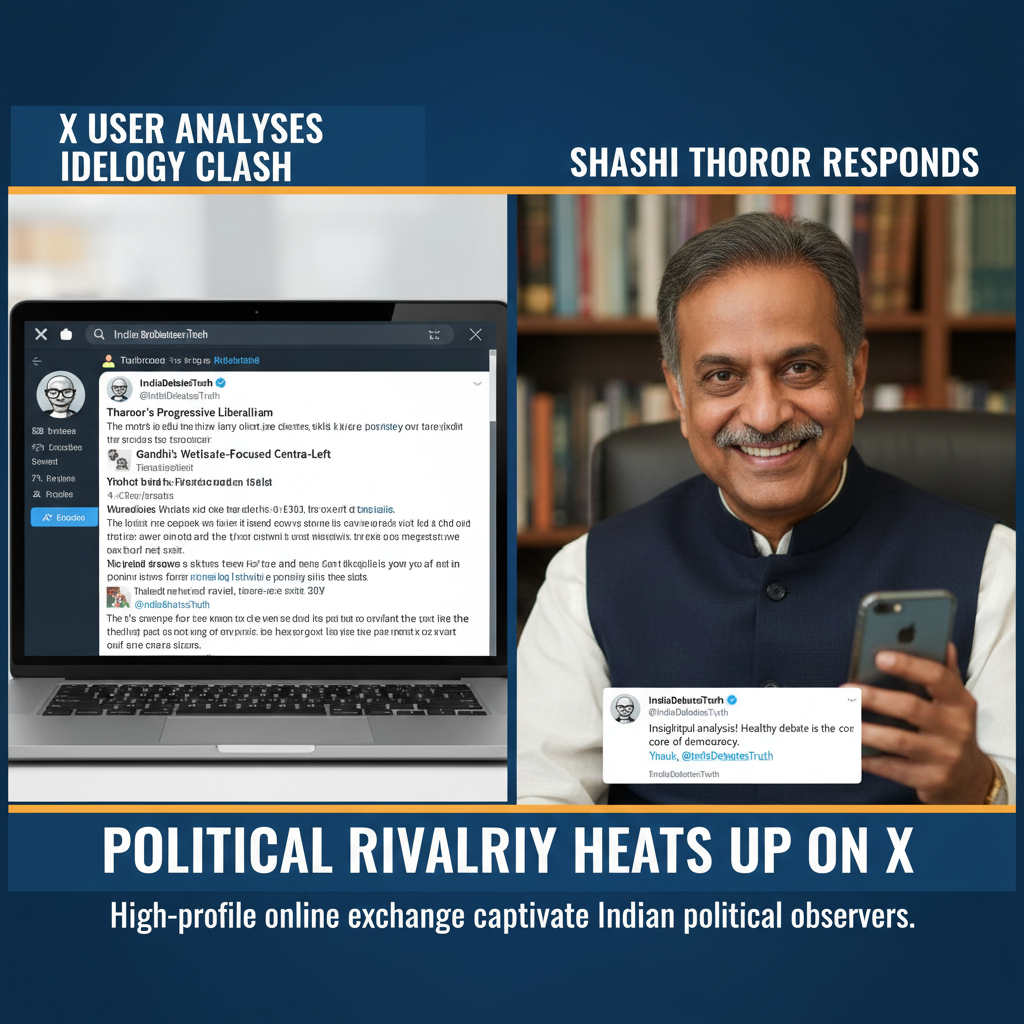
A detailed post by an X (formerly Twitter) user dissecting the ideological differences between senior Congress leader Shashi Tharoor and party figurehead Rahul Gandhi has sparked a fresh political debate online, prompting a rare and measured response from Tharoor himself.
The post, which gained rapid traction, compared the two leaders’ political philosophies, leadership styles, and visions for the Congress party, arguing that the internal ideological contrast reflects a larger identity crisis within India’s oldest political organisation.
The Viral Analysis
The X user’s analysis positioned Rahul Gandhi as the face of a mass-mobilisation, welfare-centric, and grassroots-driven politics, rooted in social justice narratives and direct engagement with marginalized communities. The post highlighted Gandhi’s emphasis on inequality, caste census advocacy, wealth redistribution debates, and his preference for street politics over elite forums.
In contrast, Shashi Tharoor was portrayed as representing a liberal, institution-focused, globally aligned worldview, stressing economic reform, international diplomacy, meritocracy, and constitutional values. The post suggested that Tharoor’s approach appeals more to urban, English-speaking, and globally connected voters, while Rahul Gandhi’s politics resonates with the party’s traditional mass base.
The user argued that these two strands of thought, though both rooted in Congress ideology, often pull the party in different strategic directions.
Why the Post Struck a Chord
The analysis gained momentum because it echoed a long-simmering conversation within political circles — whether the Congress should reinvent itself as a modern centrist alternative or double down on social justice and redistributive politics to counter the ruling dispensation.
Many users responded by praising the post for articulating what party insiders are often reluctant to say publicly. Others accused it of oversimplifying both leaders, warning against framing internal diversity as factional conflict.
As the debate escalated, the thread began trending, drawing attention from political commentators and party supporters alike.
Shashi Tharoor’s Response
Amid the online churn, Shashi Tharoor responded calmly, neither dismissing the analysis nor endorsing it fully. In his reply, Tharoor acknowledged that the Congress is a broad ideological platform, historically accommodating diverse viewpoints rather than enforcing rigid uniformity.
He emphasized that ideological plurality has been the party’s strength, not its weakness, and cautioned against interpreting differences in tone or emphasis as personal rivalry or ideological warfare.
Tharoor noted that while methods and communication styles may vary, the core objectives — defending democracy, protecting constitutional institutions, promoting inclusive growth, and preserving social harmony — remain shared across the party.
Rahul Gandhi’s Political Position
Though Rahul Gandhi did not directly respond to the specific post, his recent speeches and political campaigns underline his commitment to confronting inequality and what he describes as the concentration of power and wealth. Supporters argue that his approach reflects contemporary political realities and electoral compulsions, particularly in a deeply unequal society.
Within the Congress ecosystem, Gandhi is widely seen as the ideological anchor, shaping the party’s national narrative even as other leaders contribute their own intellectual and strategic inputs.
A Reflection of Congress’ Broader Dilemma
The online exchange has reignited discussion about whether Congress’ ideological diversity is being communicated effectively to voters. Political analysts note that internal debates, when aired publicly, can either signal intellectual vibrancy or feed perceptions of confusion.
Some argue that Tharoor’s globalist, policy-driven articulation complements Rahul Gandhi’s emotive, mass-oriented politics, offering the party a chance to speak to multiple voter segments simultaneously. Others caution that without clear narrative cohesion, such contrasts risk diluting the party’s message.
Social Media and Political Discourse
The episode also underscores how social media platforms have become arenas for ideological interpretation, where individual users can influence national political conversations. A single analytical post, once amplified, can compel responses from senior leaders, blurring traditional boundaries between public discourse and political leadership.
Experts say this dynamic reflects a shift in political communication, where leaders must increasingly engage with narratives shaped outside formal party structures.
What Lies Ahead
As the Congress prepares for upcoming political challenges, the debate sparked by the X user’s post serves as a reminder of the party’s ongoing struggle to balance ideological breadth with electoral clarity.
Shashi Tharoor’s response, measured and inclusive, appears aimed at reframing the conversation — from clash to coexistence — reinforcing the idea that ideological diversity need not translate into division.
Whether voters see this diversity as strength or uncertainty may ultimately shape the Congress party’s political trajectory in the years ahead.