
















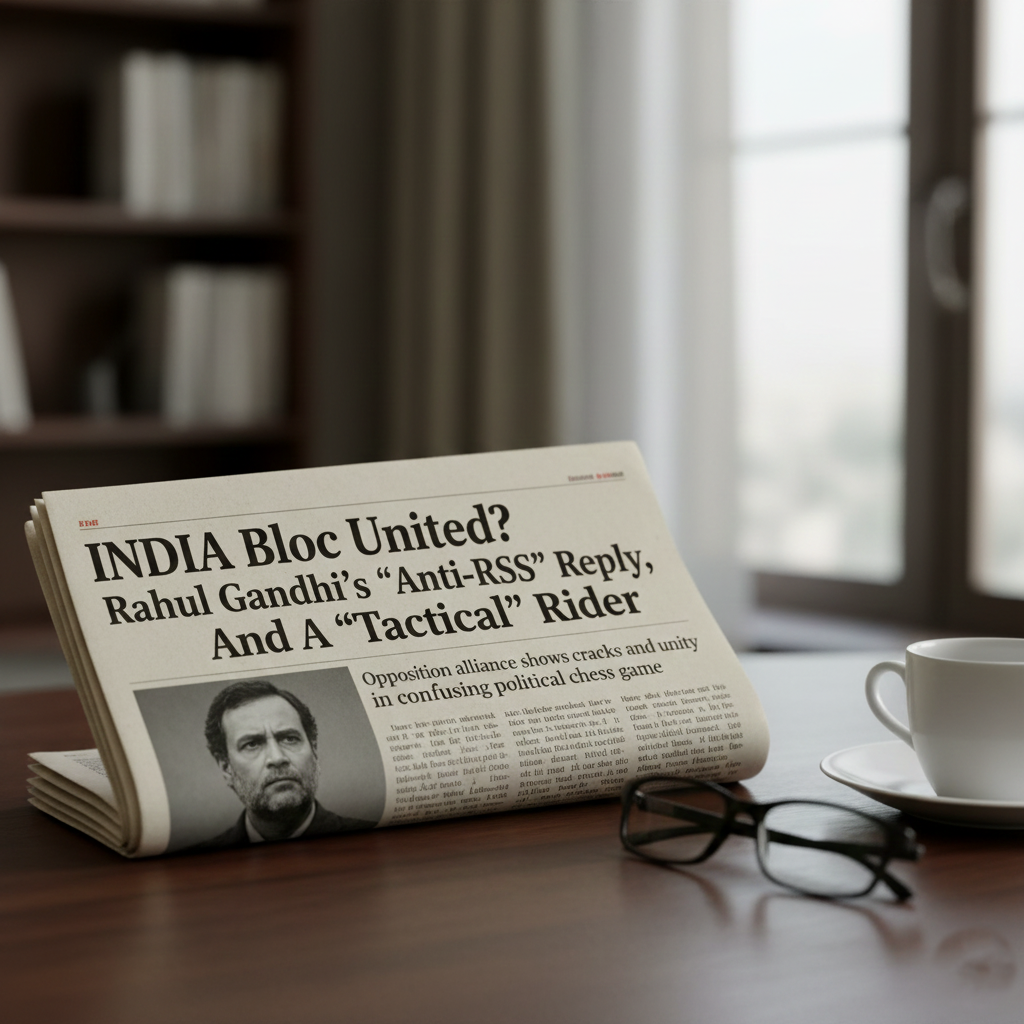
🤝 INDIA Bloc United? Rahul Gandhi’s ‘Anti-RSS’ Reply and a “Tactical” Rider
🧭 Introduction
Fresh questions have emerged over the unity of the INDIA opposition bloc after Rahul Gandhi’s strong “anti-RSS” remarks, accompanied by what political observers are calling a “tactical” rider.
The statement has reignited debate on whether the INDIA bloc is ideologically aligned or merely an electoral arrangement ahead of key political battles in 2025.
Rahul Gandhi’s words reflect both ideological clarity and strategic caution, highlighting the complex dynamics within the opposition alliance.
🗣️ Rahul Gandhi’s ‘Anti-RSS’ Stand
Rahul Gandhi reiterated his long-held criticism of the Rashtriya Swayamsevak Sangh (RSS), accusing it of influencing institutions and shaping national narratives.
He framed his opposition as ideological rather than personal, positioning the Congress as a defender of constitutional values.
This stance reinforces Congress’ core ideological identity, especially among its traditional voter base.
🎯 The “Tactical” Rider Explained
Alongside his criticism, Rahul Gandhi added a rider that cooperation within the INDIA bloc would be issue-based rather than unconditional.
This rider is being seen as a strategic move to:
Avoid alienating allies with differing ideological positions
Maintain flexibility in seat-sharing and campaign messaging
Prevent internal friction within the alliance
Analysts say this balancing act is meant to keep the bloc intact while protecting Congress’ political space.
🧩 Is the INDIA Bloc Truly United?
The INDIA bloc consists of parties with diverse ideologies, regional priorities, and voter bases.
While there is agreement on opposing the ruling establishment, differences remain on:
Ideological narratives
Leadership projection
Long-term political vision
Rahul Gandhi’s nuanced remarks highlight these underlying tensions without directly confronting allies.
⚖️ Balancing Ideology and Alliance Politics
Rahul Gandhi’s approach signals:
Firmness on ideological positions like opposition to the RSS
Pragmatism in alliance management
Political experts believe this dual strategy is essential to keep the bloc functioning while appealing to core supporters.
🏛️ Reactions Within the INDIA Bloc
Some alliance partners have welcomed the clarity, seeing it as honest and transparent.
Others remain cautious, wary that strong ideological statements could complicate coalition messaging in certain regions.
The response reflects the delicate balance required to maintain unity within a broad opposition front.
🌐 Political Significance Ahead of 2025
As India approaches major political milestones in 2025:
Alliance cohesion will be closely scrutinized
Leadership roles and messaging will gain prominence
Rahul Gandhi’s statement may shape how the INDIA bloc navigates ideological differences while presenting a united front.
🔮 What This Means Going Forward
The INDIA bloc’s success will depend on:
Effective coordination among allies
Managing ideological diversity without public rifts
Translating unity into electoral strategy
Rahul Gandhi’s “anti-RSS” reply with a tactical rider suggests a cautious but calculated path ahead.
📝 Conclusion
Rahul Gandhi’s remarks raise a critical question: is the INDIA bloc bound by shared ideology or electoral necessity?
His strong “anti-RSS” stance combined with tactical flexibility reflects the challenges of opposition politics.
As 2025 approaches, the alliance’s ability to balance conviction with compromise will determine its political future.