































“Bad Deal”: New Zealand Foreign Minister Slams India Trade Agreement
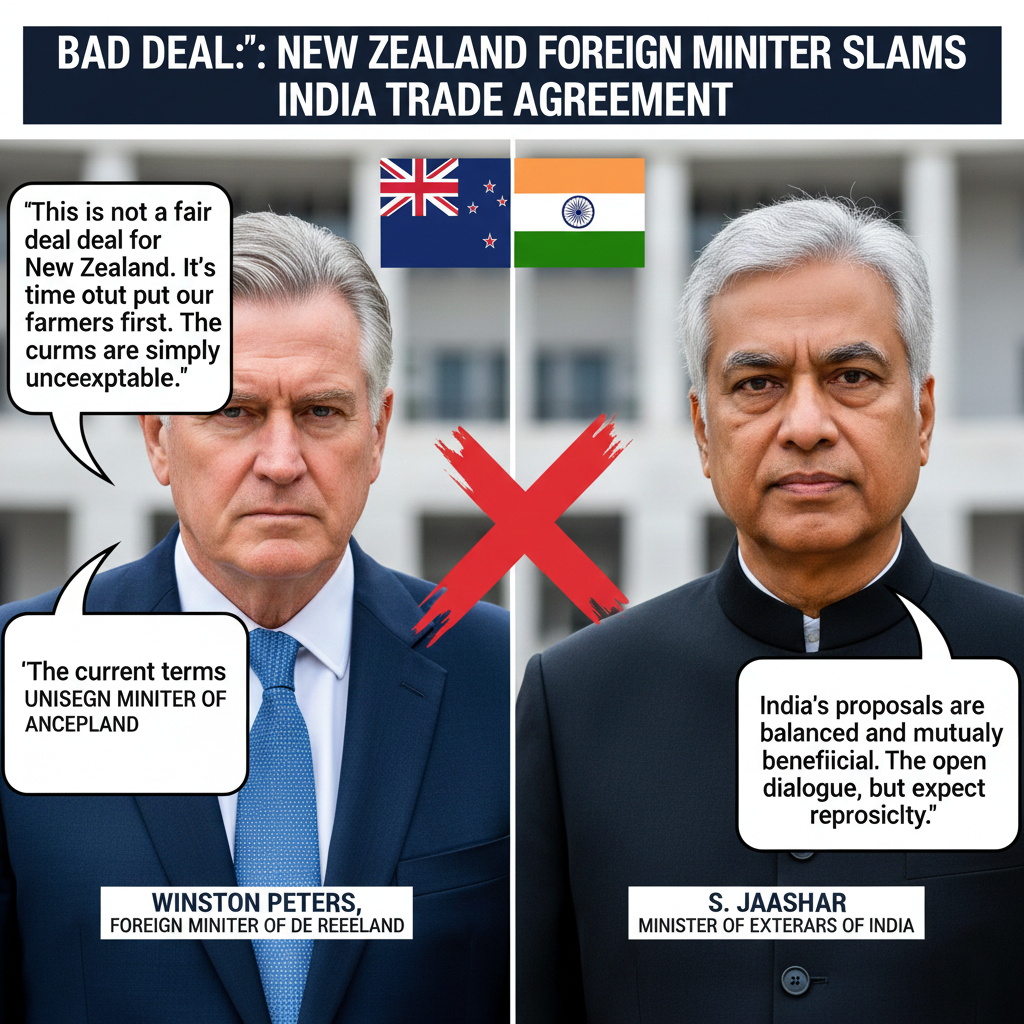
New Zealand’s Foreign Minister, Winston Peters, has openly criticised the recently announced Free Trade Agreement (FTA) between New Zealand and India, calling it a “bad deal” for his country. His remarks have sparked debate within New Zealand’s governing coalition and raised questions about the deal’s economic and political impact.
1. Strong Opposition From Within Government
Winston Peters, leader of the New Zealand First party and Foreign Minister, expressed his regret over the agreement immediately after it was announced.
He argued that while the pact has been celebrated by leaders in both countries, it fails to deliver fair terms for New Zealand and could negatively affect key sectors.
Peters also stated that his party intends to oppose the legislation required to ratify the agreement when it is presented to Parliament.
2. Imbalance in Market Access
A key criticism concerns New Zealand’s dairy sector, one of the country’s most vital industries.
Peters pointed out that the agreement allows Indian goods broader access to New Zealand markets, while India continues to maintain high tariffs on dairy products such as milk, cheese, and butter.
This creates an uneven playing field, leaving New Zealand farmers at a disadvantage and vulnerable to increased competition.
3. Immigration and Labour Concerns
Peters also raised concerns about provisions in the deal affecting the labour market.
The agreement includes concessions allowing greater access for Indian workers and expanded work rights for Indian students.
He argued that these measures could place additional pressure on New Zealand’s employment sector, particularly in areas already facing labour shortages.
4. Internal Political Divide
The criticism highlights friction within New Zealand’s ruling coalition.
While the National Party supports the FTA as a strategic move to strengthen economic ties, New Zealand First, Peters’ party, has reservations and believes Parliament should have secured stronger terms.
This disagreement could complicate the government’s efforts to pass the trade agreement smoothly.
5. Wider Debate at Home
Not all political actors in New Zealand oppose the agreement. The Labour Party, now in opposition, has described it as a positive step forward for economic cooperation.
However, the controversy illustrates the challenge governments face when balancing global trade ambitions with protection of domestic industries and labour interests.
6. Objectives of the Agreement
The India–New Zealand FTA aims to deepen bilateral trade, eliminate tariffs on many goods, and encourage investment flows.
Officials from both countries describe it as a historic pact with the potential to significantly boost trade.
Despite these goals, Winston Peters’ dissent shows that not all stakeholders perceive the benefits as immediate or balanced, especially in politically sensitive sectors like agriculture.
7. What Happens Next
As the agreement moves toward potential ratification in Parliament, Peters’ opposition could influence debates and possibly lead to revisions or concessions.
The episode underscores a broader reality about international trade agreements: while they may promise economic growth, they often face domestic scrutiny when constituents perceive risks to jobs, local industries, or national interests.