





























Who Was Dipu Chandra Das, the Hindu Man Lynched in Bangladesh?
The brutal lynching of Dipu Chandra Das, a young Hindu man in Bangladesh, has sparked widespread shock, grief, and concern, bringing renewed attention to issues of mob violence, communal tension, and minority safety in the country. The incident, which unfolded amid a tense political and social atmosphere, has raised serious questions about law enforcement, misinformation, and the dangers of vigilante justice.
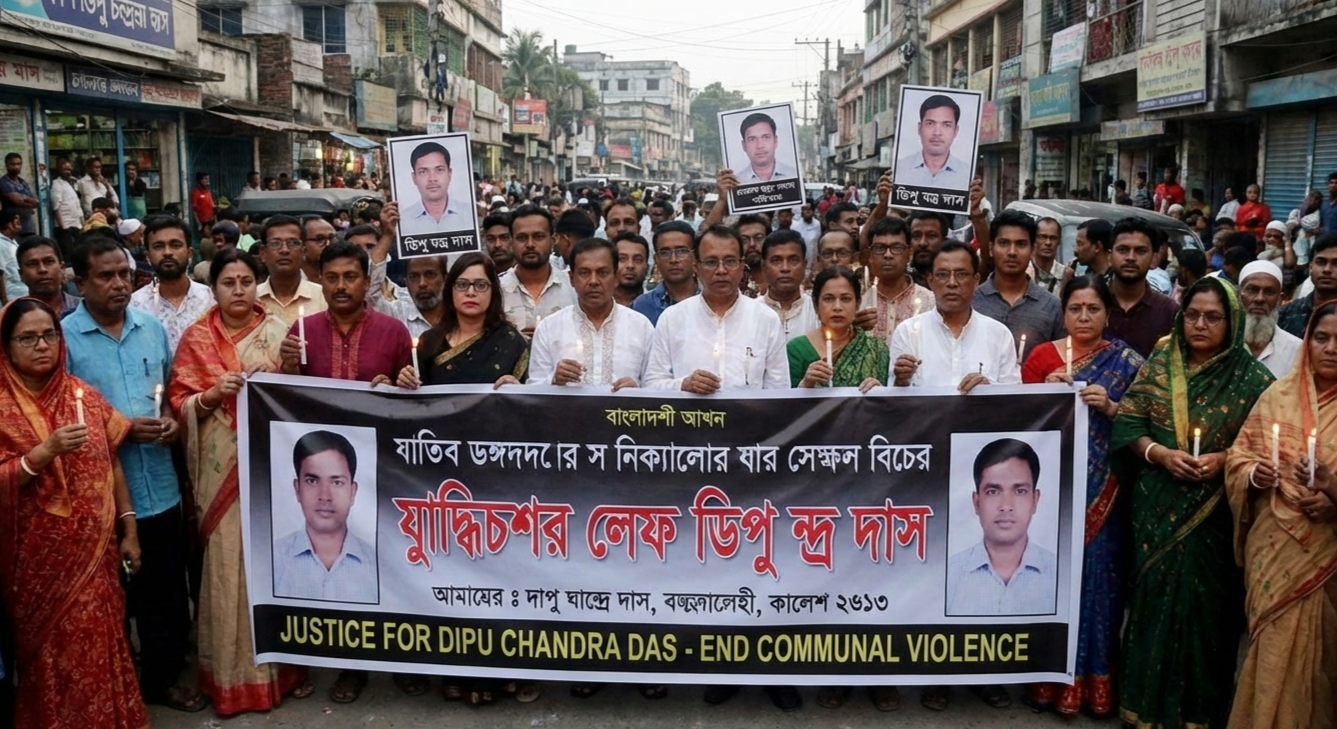
Who Was Dipu Chandra Das
Dipu Chandra Das was a young garment factory worker in his mid-20s, earning a living through daily wage labour. He had moved to the Bhaluka area of Mymensingh district in search of employment opportunities and lived there as a tenant.
Those who knew him described him as a quiet and hardworking individual with no known criminal record or prior disputes. Like many migrant workers, he lived a modest life, focused on work and survival, far removed from political or communal activism.
How the Incident Unfolded
The incident took place during a period of heightened unrest in Bangladesh, when protests and political tensions had already created a volatile environment. According to preliminary findings, Dipu Chandra Das was accused by locals of making remarks considered offensive to religious sentiments.
Such allegations, whether verified or not, often carry grave consequences in emotionally charged environments. In this case, the accusation quickly spread, triggering anger and mobilising a mob.
Before authorities could intervene, the crowd allegedly assaulted Dipu Chandra Das, beating him severely. He succumbed to his injuries at the scene. The violence did not stop there — his body was reportedly tied and set on fire, an act that deeply shocked observers and underscored the extreme brutality of the incident.
Public Panic and Wider Impact
After the lynching, panic spread in the surrounding area. The movement of the body and the violence disrupted normal life, with roads blocked and residents fearing further unrest. The incident quickly became a flashpoint in an already tense atmosphere.
News of the killing spread rapidly, provoking outrage both within Bangladesh and beyond its borders. Minority communities, in particular, expressed fear and insecurity, viewing the incident as a sign of deepening vulnerability.
Police Action and Arrests
Law enforcement agencies launched an investigation soon after the incident. Multiple individuals suspected of participating in the mob attack were detained for questioning. Authorities stated that they were working to identify all those involved, including those who instigated the violence and those who carried it out.
Officials assured that the case would be pursued under strict legal provisions related to murder and destruction of evidence, and that no one involved would be spared.
Government Response
The Bangladesh government strongly condemned the lynching, calling it a barbaric act that has no place in a civilised society. Senior officials reiterated that mob justice cannot be tolerated and urged citizens to maintain communal harmony.
Public statements stressed that allegations of religious insult must be handled through lawful channels and not through violence.
Concerns Over Minority Safety
The killing of Dipu Chandra Das has once again raised concerns about the safety of religious minorities during times of unrest. Human rights advocates argue that minorities often become soft targets when tensions rise, especially when rumours or unverified accusations spread rapidly.
The incident has also highlighted the urgent need for faster police response, better community awareness, and stronger legal deterrents against mob violence.
Role of Misinformation
Observers noted that misinformation and unchecked rumours played a critical role in escalating the situation. In the absence of verification, emotions overtook reason, leading to irreversible consequences.
Experts stress that stronger action is needed against those who spread false or inflammatory claims that incite violence.
A Life Lost, Questions Remain
Beyond political debates and communal discussions, the core tragedy remains the loss of a young life. Dipu Chandra Das was not a public figure, activist, or criminal — he was an ordinary worker whose life ended in an act of senseless violence.
His death has become a grim reminder of how fragile safety can be when law and order give way to mob rule.
Conclusion
The lynching of Dipu Chandra Das stands as one of the most disturbing incidents in recent times, reflecting the dangers of unchecked anger, misinformation, and communal tension. As investigations continue and arrests are made, many hope the case will lead to justice — not only for the victim, but also as a warning against future acts of mob violence.
The incident underscores an urgent truth: no allegation, belief, or grievance can ever justify taking a human life outside the rule of law.