



























How Violence Unfolded at Bangladesh Media Offices and the Aftermath
Bangladesh witnessed a disturbing episode of violence as mobs targeted multiple media offices in different parts of the country, triggering nationwide concern over press freedom, public order, and political tensions. The attacks, which unfolded over several hours, left newsrooms damaged, journalists shaken, and authorities under pressure to restore calm and ensure accountability.
The incident has been described as one of the most serious assaults on media institutions in recent years, raising urgent questions about the safety of journalists and the role of political mobilisation in triggering unrest.
How the Violence Began
According to preliminary accounts, the violence erupted amid heightened political tensions following a series of provocative developments that had already inflamed public sentiment. Crowds began gathering near prominent media houses, accusing certain outlets of biased reporting and spreading narratives that angered specific groups.
What started as verbal confrontation quickly escalated. Protesters allegedly began pelting stones, smashing windows, and forcing their way into office premises. In several locations, security personnel were overwhelmed by the sudden surge of aggressive crowds.
Targeting of Media Offices
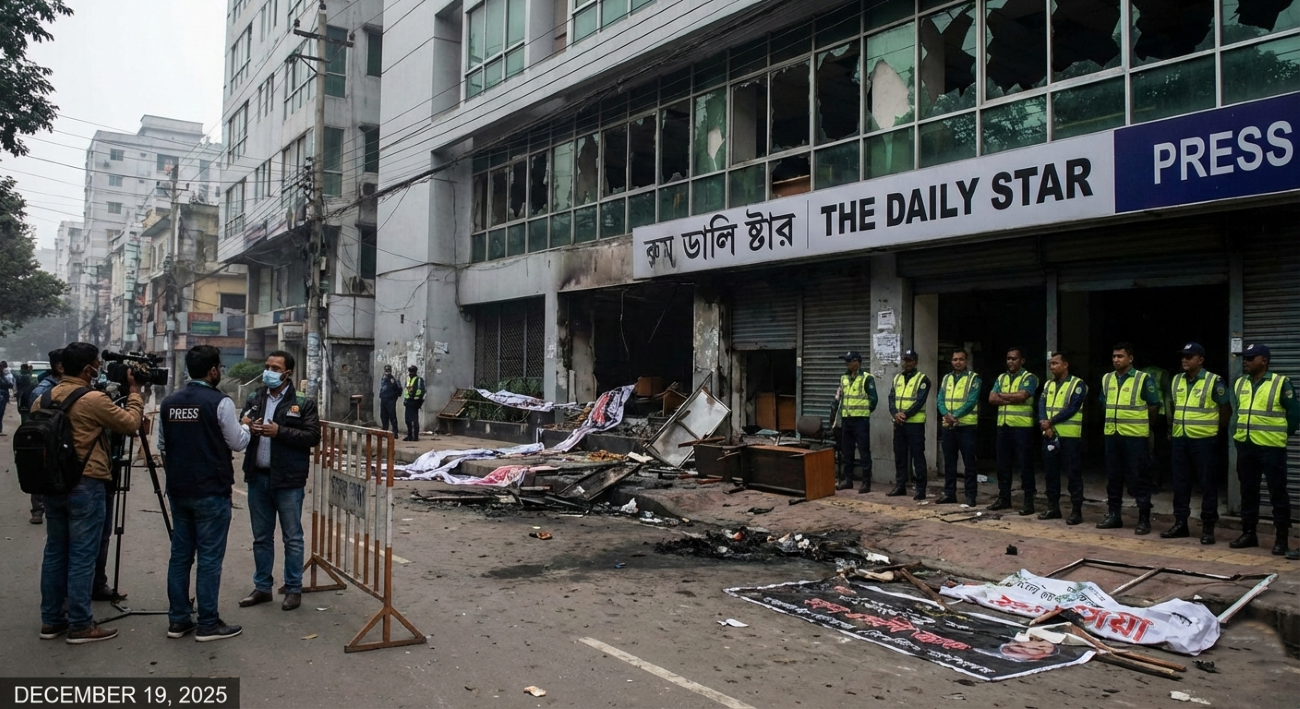
Multiple media organisations reported damage to their buildings, broadcast equipment, vehicles, and office infrastructure. Glass facades were shattered, news vans vandalised, and newsroom operations brought to a halt as staff members rushed to secure their safety.
Journalists inside the offices described moments of fear and chaos as mobs attempted to breach entrances. Emergency shutters were pulled down, and live broadcasts were abruptly cut as studios went dark.
Journalists Caught in the Crossfire
Several journalists reported being threatened, chased, or verbally abused during the unrest. Some sustained minor injuries while attempting to escape or protect colleagues. Media unions later stated that the attacks were not spontaneous but appeared coordinated, aimed at intimidating voices perceived as critical.
Senior editors condemned the violence, stating that disagreements with coverage cannot justify attacks on institutions that play a vital role in democracy.
Police and Security Response
Law enforcement agencies were deployed to disperse crowds and secure media premises. Police used crowd-control measures to restore order, while additional forces were stationed outside vulnerable locations.
Authorities confirmed that several individuals were detained for questioning, though many perpetrators initially managed to flee. Investigations were launched to identify those responsible using CCTV footage and eyewitness accounts.
Political Reactions and Condemnation
Political leaders across party lines publicly condemned the attacks, calling them unacceptable and damaging to Bangladesh’s democratic image. Several ministers stressed that freedom of the press must be protected, regardless of political differences.
Opposition parties accused the government of failing to act swiftly, while ruling party representatives blamed “provocative misinformation” for inciting mob anger.
Media Community Pushes Back
Journalist associations organised emergency meetings and protests, demanding immediate arrests, compensation for damaged property, and stronger legal protections for media workers. Editors warned that unchecked violence would encourage self-censorship and erode public trust in institutions.
Some media outlets resumed operations under heavy security, while others temporarily suspended broadcasts due to extensive damage.
Public Reaction and Debate
The attacks sparked intense debate among the public. Many citizens expressed shock that media offices could be targeted so openly, while others highlighted growing intolerance toward dissenting voices.
Civil society groups warned that such incidents reflect deeper societal polarisation and the dangerous normalisation of mob justice.
Impact on Press Freedom
Media watchdogs cautioned that the violence could have a chilling effect on journalism in Bangladesh. Reporters may hesitate to pursue sensitive stories if safety cannot be guaranteed.
International observers also took note, emphasising that a free and safe press is essential for democratic accountability and social stability.
The Aftermath: Damage and Recovery
In the days following the violence, damaged offices began clean-up and repair efforts. News organisations assessed financial losses and psychological trauma faced by staff.
Authorities promised swift action and assured media houses of enhanced security measures, including permanent police deployment at key locations.
Conclusion
The violent attacks on media offices in Bangladesh represent a troubling escalation in political and social tensions. Beyond physical damage, the incident struck at the heart of press freedom and democratic expression.
As investigations continue, the focus remains on ensuring justice for those affected and preventing similar incidents in the future. The episode serves as a stark reminder that safeguarding journalism is not just about protecting buildings, but about defending the right to inform, question, and hold power accountable.