































Why 35% of Restaurants in India Want to Quit Food Delivery Apps
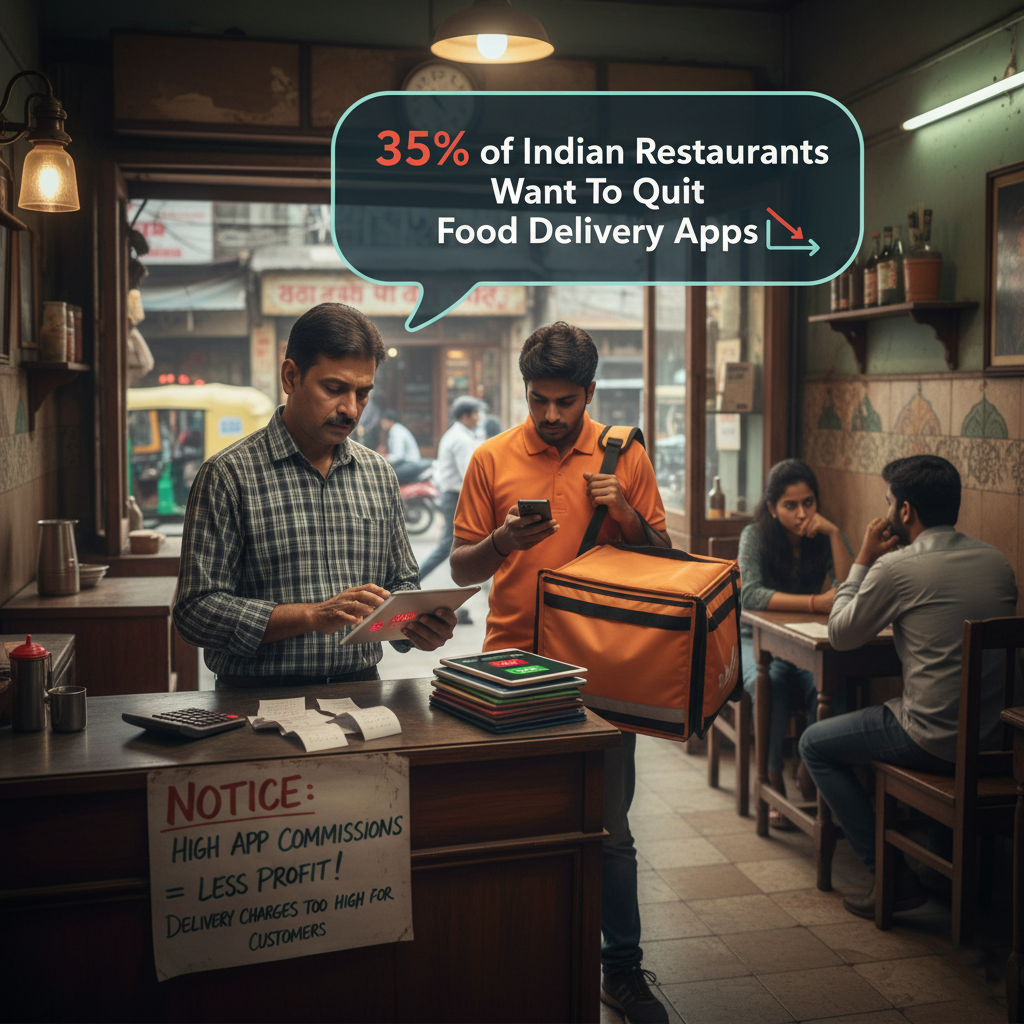
In recent years, food delivery apps have played a transformative role in India’s restaurant industry — expanding customer reach and driving sales beyond physical dining rooms. But now, a growing number of restaurant owners are expressing deep frustration, with about 35% saying they would rather quit food delivery platforms than continue under current conditions.
The trend marks a significant shift in sentiment, sparking widespread debate about the balance between digital convenience and sustainable business practices.
From Lifeline to Liability
During the pandemic, delivery apps like Swiggy, Zomato, and others were seen as a lifeline. With dine-in restrictions in place, restaurants depended heavily on these platforms to survive. Many owners embraced delivery services as a core part of their business model.
But as the world reopened, the relationship between restaurants and delivery platforms has grown increasingly strained.
Rising Commission Charges
One of the biggest complaints from restaurant owners is the high commission rates charged by delivery apps. These charges can range from 20% to 35% or more on each order, significantly eating into already tight profit margins.
For many small and mid-sized establishments, high commissions mean that after factoring in food costs, staff wages, packaging, and overheads, they are left with little net profit — or worse, operating at a loss for delivery orders.
Owners argue that such steep charges make little sense when their own delivery staff or direct orders could do the same work without the hefty cut.
Discounts and Deep Promotions
Food delivery apps often run heavy discount campaigns — “50% off”, “Buy 1 Get 1”, flash sales, freebies — to attract customers and boost app engagement. While such deals bring order volume, they often come at the expense of restaurant profitability.
Many restaurateurs feel forced to subsidise these discounts themselves, effectively paying the platform and the customer to accept the order. In several cases, restaurants have reported offering a discount that exceeds their own margins just to appear competitive on the app’s listings.
Unpredictable Order Flow and Quality Control
Another challenge is lack of quality control once an order leaves the restaurant kitchen. Restaurants bear the brunt of customer dissatisfaction — even when issues like delivery delays, cold food on arrival, or missing items are caused by the delivery partner, not the kitchen.
Complaints sometimes lead to order cancellations, refunds, or negative ratings that hurt the restaurant’s online reputation — despite no control over the delivery experience.
Data Sharing and Customer Ownership Issues
Restaurants also argue that delivery apps own the customer data, not the restaurants themselves. This means that restaurants cannot directly communicate with customers, build loyalty programs, or market to repeat customers outside the app.
From the restaurateur’s perspective, they are doing the work while the app builds the brand and customer base.
Alternative Models Gaining Traction
The growing dissatisfaction has led many restaurants to look for alternatives:
Direct Ordering Platforms: Many restaurants are now pushing customers to order directly through their own websites or WhatsApp.
In-House Delivery Systems: Some chains are investing in their own delivery fleets, retaining more control over service and costs.
Cloud Kitchens with Focused Delivery: Others are experimenting with delivery-only models that reduce overheads while cutting the dependency on third-party apps.
In cities where local delivery platforms or independent delivery services have emerged, some restaurants report more favourable terms and direct engagement with customers.
Calls for Regulation and Policy Change
Restaurant associations and trade bodies have increasingly called for government intervention to regulate commissions, fair contracts, and transparency in pricing.
They argue that:
Delivery platforms should charge reasonable commission caps
Contracts should be non-exploitative and negotiable
Restaurants should have access to their own customer data
Some regions have already started exploring regulatory frameworks that aim to protect small businesses from excessive platform charges.
Voices from the Industry
Many restaurant owners speak candidly:
Small café owners say delivery orders often arrive with negligible profit after costs.
Multi-outlet chains note that while delivery apps drive visibility, the long-term cost structure is unsustainable.
Newer entrepreneurs argue that early adoption was beneficial, but the current model threatens the very survival of independent eateries.
Their collective message is clear: volume without profit is not a viable business strategy.
Impact on Consumers
If a significant number of restaurants reduce their presence on delivery apps or leave them altogether, consumers could see:
Higher prices
Reduced variety on app menus
More direct engagement with restaurants
A shift toward in-house delivery and pickup models
Some customers already report being asked by restaurants to place orders directly or via phone to enjoy better pricing.
Looking Ahead
The tension between restaurants and delivery platforms points to a broader question facing digital marketplaces: How can platform convenience co-exist with sustainable business economics for sellers?
For India’s vibrant and diverse restaurant industry, this debate is becoming central to its future growth.
Conclusion
The fact that roughly 35% of restaurants in India would rather quit delivery apps than continue under current terms highlights an urgent need for change. While delivery platforms revolutionised food ordering and expanded market access, many restaurateurs now say that the cost of doing business has become too high.
The coming months could be pivotal. Whether through collective action, policy intervention, or evolving business models, India’s restaurant community appears ready to redefine its relationship with food delivery apps — striving for a model that ensures profitability, fairness, and long-term sustainability.