


































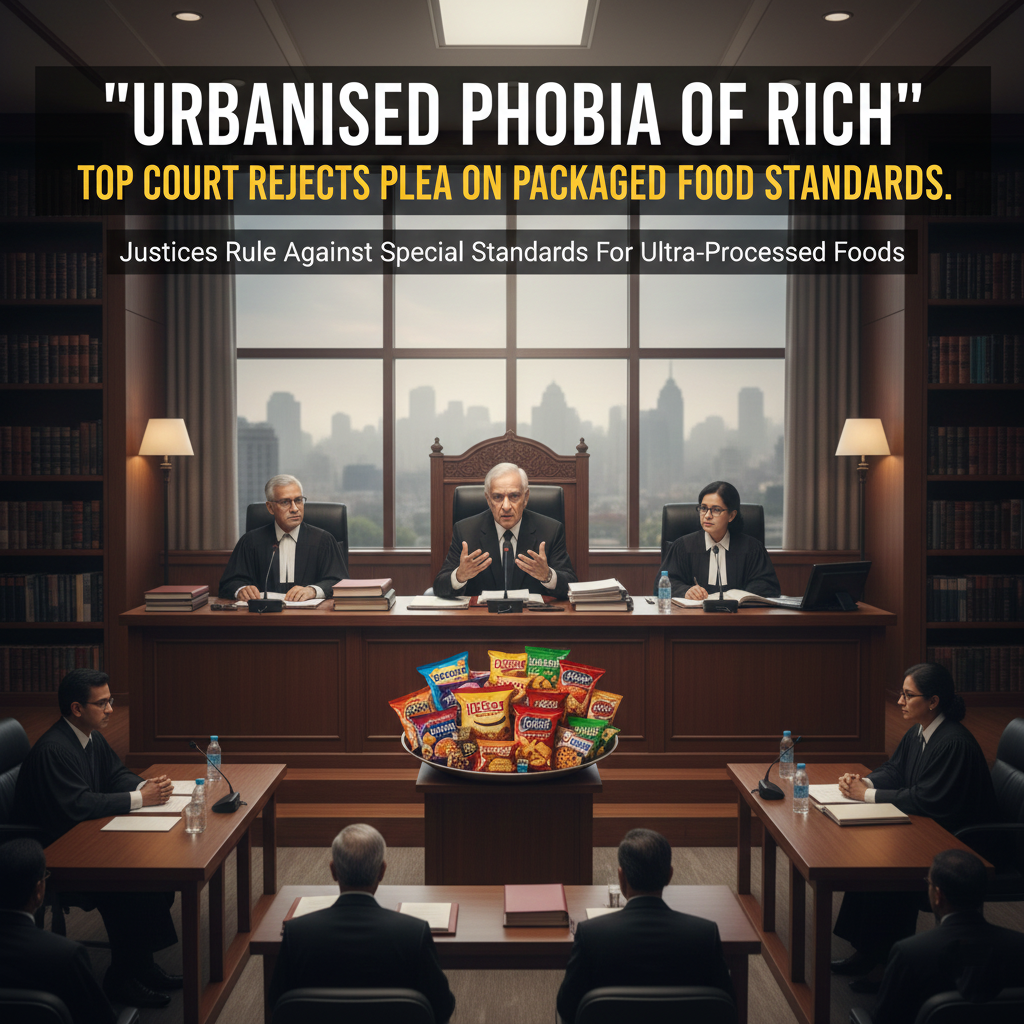
Urbanised Phobia of Rich”: Top Court Rejects Plea on Packaged Food Standards
The Supreme Court has dismissed a petition challenging existing packaged food standards, making strong observations on what it described as an “urbanised phobia of the rich.” The court said the plea failed to consider ground realities and broader public interest, particularly the needs of the vast population that relies on affordable packaged food for daily sustenance.
The remarks have sparked discussion on food safety, class perspectives, and the balance between regulation and accessibility.
What the Plea Sought
The petition had raised concerns over the quality, safety, and nutritional standards of packaged food products, urging stricter regulations and tighter compliance norms. The petitioner argued that certain packaged foods posed health risks and should face more stringent scrutiny.
The plea also sought enhanced labeling requirements and stronger enforcement mechanisms, claiming that current standards were inadequate to protect consumers.
Court’s Sharp Observations
While rejecting the plea, the Supreme Court made pointed remarks about the nature of the concerns raised. The bench observed that the petition reflected an “urbanised phobia of the rich,” suggesting that it was driven more by elite anxieties than by the lived realities of the majority of Indians.
The court emphasized that packaged food plays a critical role in the lives of millions, especially daily wage workers, migrant laborers, and low-income families who depend on affordable, easily accessible food options.
Balancing Safety and Accessibility
The bench acknowledged the importance of food safety and consumer protection but cautioned against imposing regulations that could make essential food items unaffordable or inaccessible.
Judges noted that excessive regulation, without considering economic impact, could harm small manufacturers and push up prices, disproportionately affecting the poor.
Existing Regulatory Framework
The court pointed out that India already has a comprehensive regulatory mechanism governing packaged food, including standards for labeling, hygiene, and safety. Regulatory bodies regularly update norms based on scientific evidence and public health considerations.
Unless there is clear proof of systemic failure or widespread harm, courts should be cautious in intervening in policy matters best handled by expert agencies, the bench said.
Class Divide in Food Debates
The court’s remarks highlighted a broader issue — the growing divide between urban elite perspectives and the realities faced by the majority population. Judges noted that food choices and safety concerns often differ sharply between affluent urban consumers and those struggling for daily meals.
The bench warned against framing policy debates solely through an elite lens, stressing that inclusivity and practicality must guide regulatory decisions.
Health Concerns Not Dismissed
Importantly, the Supreme Court clarified that it was not dismissing genuine health concerns associated with poor-quality food. However, it said such issues must be addressed through scientific data, targeted policy interventions, and regulatory oversight — not blanket bans or sweeping judicial orders.
The court encouraged regulators to continue improving standards in a phased and evidence-based manner.
Impact of the Ruling
The ruling is expected to reassure food manufacturers and small businesses, while reaffirming judicial restraint in matters of economic and social policy. It also sends a clear message that public interest litigation must reflect broader societal needs rather than narrow viewpoints.
Legal experts say the judgment reinforces the principle that courts should not replace policymakers or regulators without compelling reasons.
Public and Expert Reactions
The observations have triggered mixed reactions. Some public health advocates expressed disappointment, arguing that stronger food standards are essential in combating lifestyle diseases. Others welcomed the ruling, saying it acknowledged the complex realities of food access in a diverse and unequal society.
Conclusion
By rejecting the plea on packaged food standards and calling it an expression of “urbanised phobia of the rich,” the Supreme Court has underscored the importance of balancing safety, affordability, and inclusivity. The judgment highlights the need for policy decisions rooted in evidence and empathy for all sections of society.
The ruling serves as a reminder that public health, economic realities, and social equity must go hand in hand when shaping regulations that affect everyday life.