





























G Ram G Bill Clears Lok Sabha Amid Uproar, Opposition Tears Papers
The Lok Sabha on Tuesday passed the controversial G Ram G Bill after a heated debate that witnessed strong protests from the Opposition, slogan-shouting, and dramatic scenes of lawmakers tearing papers inside the House. The passage of the Bill marked one of the most turbulent parliamentary sessions in recent times, reflecting deep political divisions over the legislation.
Despite repeated disruptions, the government pushed the Bill through, asserting that it was necessary for national interest, while opposition parties accused the ruling side of bulldozing Parliament and undermining democratic norms.
Chaos Inside the House
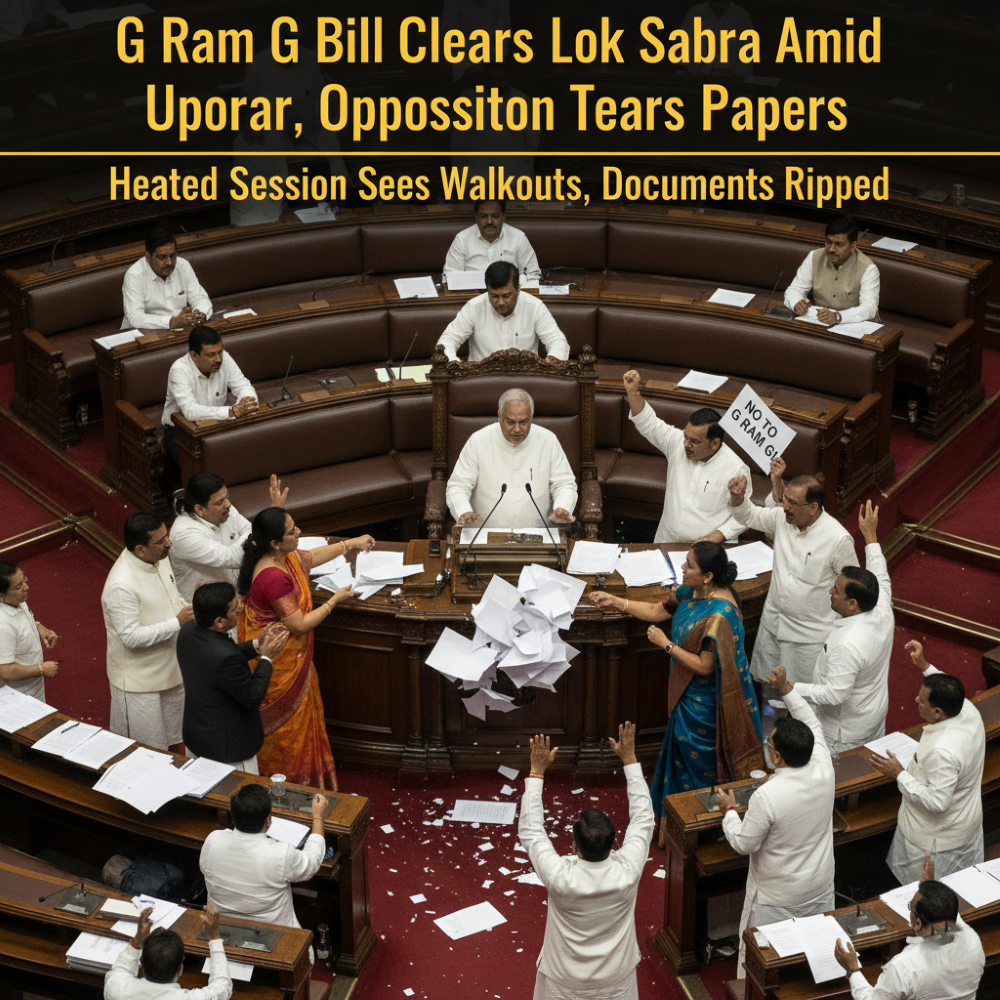
Soon after the Bill was tabled for voting, opposition MPs stormed the well of the House, raising slogans and accusing the government of refusing to engage in meaningful debate. Several members were seen tearing copies of documents and waving placards as a mark of protest.
The Speaker repeatedly appealed for order, urging members to return to their seats and allow proceedings to continue. However, the uproar persisted, forcing brief adjournments before the House reconvened to complete the voting process.
What the G Ram G Bill Proposes
According to the government, the G Ram G Bill aims to address long-pending structural and administrative issues linked to governance, transparency, and accountability. Ministers defending the legislation said the Bill would streamline processes, reduce ambiguity, and strengthen institutional frameworks.
They argued that the reforms proposed under the Bill were overdue and essential for modernising systems that have remained unchanged for decades.
Government’s Defence
Senior ministers maintained that adequate time had been provided for discussion and accused the Opposition of deliberately disrupting proceedings to stall reform. They said the government had incorporated suggestions from various stakeholders and that the Bill was the result of extensive consultation.
“The nation cannot be held hostage to constant disruptions,” a minister said during the debate, adding that Parliament must function and deliver outcomes.
Opposition’s Strong Objections
Opposition leaders sharply criticised the Bill, alleging that it concentrates excessive power in the hands of the Centre and weakens democratic checks and balances. They claimed the legislation could be misused and demanded that it be sent to a parliamentary committee for detailed scrutiny.
Several opposition MPs accused the government of avoiding debate and pushing the Bill through without addressing serious concerns raised by lawmakers and civil society groups.
Papers Torn, Protests Intensify
As the Speaker announced that voting would proceed, protests escalated. Opposition members tore papers and shouted slogans, accusing the government of silencing dissent. Marshals were deployed to maintain order, though no physical confrontation was reported.
The dramatic scenes underscored the depth of political tension surrounding the Bill.
Bill Passed by Voice Vote
Amid the din, the G Ram G Bill was passed by a voice vote, with the government securing the numbers required for its passage. Opposition parties refused to participate in the vote, registering their protest by remaining in the well of the House.
Following the passage, several opposition leaders walked out, calling the process “undemocratic” and “forced.”
Political Reactions After Passage
Soon after the Bill cleared the Lok Sabha, political reactions poured in. Ruling party leaders hailed the move as a decisive step toward reform and governance efficiency.
Opposition leaders, however, warned that the fight was far from over and said they would continue to oppose the legislation both inside and outside Parliament.
What Happens Next
With the Lok Sabha’s approval secured, the Bill will now move to the Rajya Sabha, where another intense debate is expected. The government will need to manage numbers and navigate opposition resistance in the Upper House.
Analysts believe the Bill’s future could hinge on negotiations, possible amendments, or further political confrontation.
Broader Implications
The passage of the G Ram G Bill amid chaos has once again raised questions about the functioning of Parliament, the shrinking space for debate, and the growing polarisation in Indian politics.
Experts warn that frequent disruptions and rushed legislation risk eroding public trust in democratic institutions.
Conclusion
The G Ram G Bill’s clearance in the Lok Sabha, marked by uproar and opposition protests, has become a defining moment of the current parliamentary session. While the government sees it as a bold reform, critics view the process as deeply flawed.
As the Bill heads to the Rajya Sabha, the political battle over its intent, impact, and legitimacy is set to intensify, keeping Parliament at the centre of national attention.