


























How Akshaye Khanna in Dhurandhar Made an Age-Old Baloch War Dance Go Viral
Actor Akshaye Khanna’s performance in Dhurandhar has unexpectedly brought global attention to an ancient Baloch war dance, transforming a centuries-old tribal tradition into a viral cultural phenomenon. What began as a brief but powerful cinematic sequence has now sparked widespread curiosity about Baloch history, warrior rituals, and indigenous art forms that have long existed outside the mainstream spotlight.
The moment, marked by raw intensity and symbolic movement, quickly captured audiences’ attention and became one of the most talked-about elements of the film.
A Scene That Struck a Cultural Chord
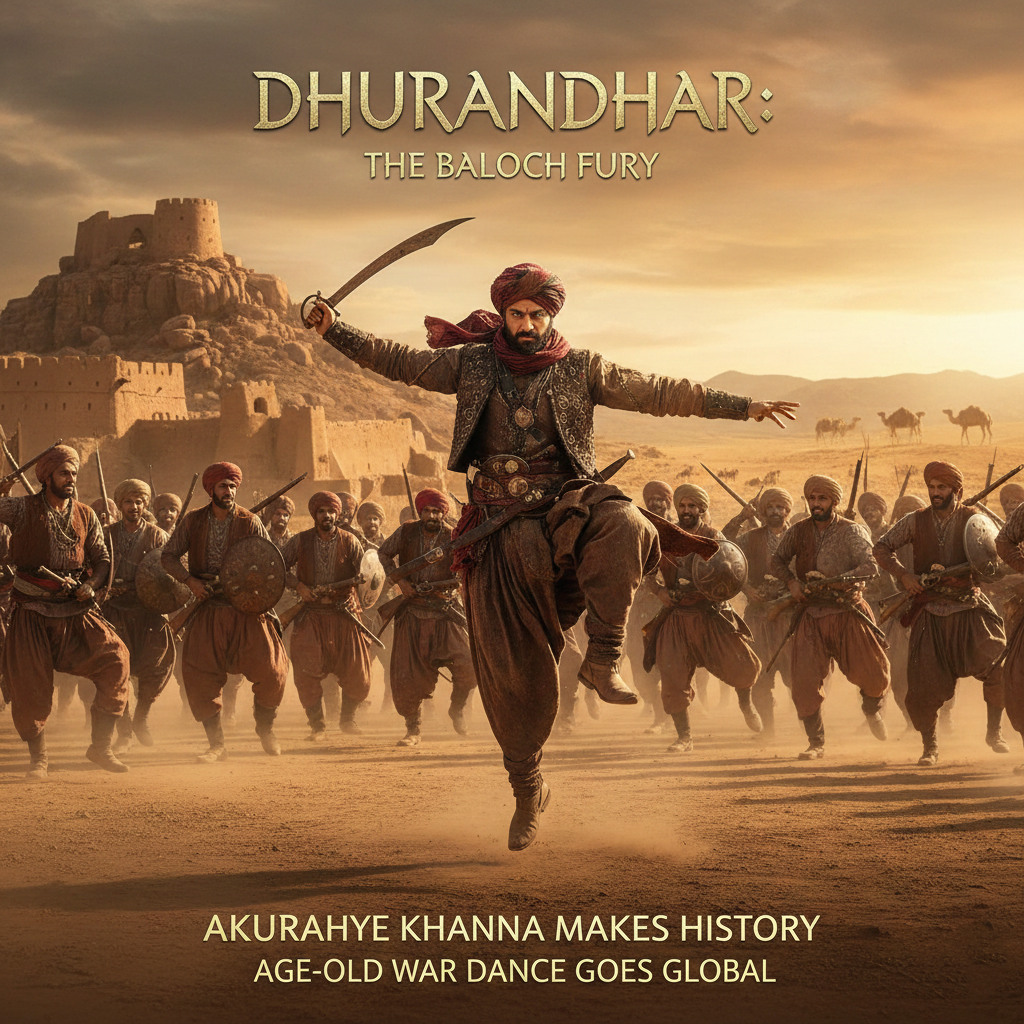
In Dhurandhar, Akshaye Khanna portrays a hardened, enigmatic character shaped by conflict, survival, and deep-rooted tradition. One pivotal scene shows him performing a fierce, rhythmic dance before a confrontation, drawing heavily from the traditional Baloch war dance known for its aggressive footwork, sharp turns, and defiant body language.
The sequence, stripped of flashy choreography and accompanied by minimal music, relied on primal energy and storytelling through movement. Viewers described it as hypnotic, unsettling, and deeply authentic, setting it apart from conventional Bollywood dance numbers.
What Is the Baloch War Dance?
The Baloch war dance is a centuries-old tribal tradition historically performed by warriors before battle. It symbolises courage, unity, and readiness for combat. The dance is characterised by strong stomps, circular formations, shoulder movements, and intense facial expressions that convey aggression and resolve.
Traditionally performed during tribal gatherings and ceremonial occasions, the dance served both as a morale booster and a demonstration of collective strength. Over time, however, it remained largely confined to regional practice and cultural documentation.
From Obscurity to Viral Fame
Following the film’s release, clips of Akshaye Khanna’s performance began circulating widely on social media. Audiences, unfamiliar with the dance’s origins, were intrigued by its raw power and began searching for its cultural roots.
Soon, videos of real Baloch performers surfaced online, with users drawing comparisons between the cinematic portrayal and authentic tribal performances. Hashtags related to the dance, the film, and Akshaye Khanna began trending, effectively turning the ancient ritual into a global conversation.
Akshaye Khanna’s Commitment to Authenticity
Sources close to the production revealed that Akshaye Khanna spent weeks studying archival footage, historical references, and movement patterns to ensure the dance was portrayed respectfully. Rather than stylising it for cinematic appeal, the actor reportedly insisted on retaining its rough edges and grounded intensity.
The filmmakers also consulted cultural experts to avoid misrepresentation, making the sequence a rare example of mainstream cinema engaging seriously with indigenous tradition.
Cultural Impact Beyond Cinema
Cultural historians and artists welcomed the renewed attention on the Baloch war dance, noting that popular cinema can play a crucial role in reviving fading traditions. Many praised Dhurandhar for sparking interest without commercialising or trivialising the ritual.
Dance schools, content creators, and cultural platforms have since begun exploring the form, sharing educational content about its origins, meaning, and evolution.
Debate on Representation and Responsibility
While the viral moment was largely celebrated, it also sparked debate on cultural ownership and representation. Some voices stressed that increased visibility must translate into respect and recognition for the communities from which such traditions originate.
Experts emphasised that while cinema can act as a bridge, it must remain conscious of context, history, and the lived realities of the cultures it portrays.
Why the Scene Worked
Analysts believe the scene resonated because it felt genuine. In an era dominated by spectacle, the stripped-down intensity of the performance stood out. Akshaye Khanna’s restrained yet ferocious portrayal allowed the dance to speak for itself, turning movement into narrative.
The scene also aligned perfectly with the film’s themes of identity, conflict, and legacy, making the dance integral to the story rather than a decorative element.
Conclusion
Akshaye Khanna’s portrayal in Dhurandhar has done more than deliver a memorable cinematic moment—it has reignited global interest in an age-old Baloch war dance that once existed on the margins of popular culture. By blending authenticity with storytelling, the film demonstrated how cinema can act as a powerful medium for cultural rediscovery.
As conversations around the dance continue to grow, the viral moment stands as a reminder that ancient traditions, when respected and presented thoughtfully, can resonate deeply even with modern audiences.