

























“Don’t Sully Ram’s Name”: Shashi Tharoor Defends Congress Amid ‘G Ram G’ Row
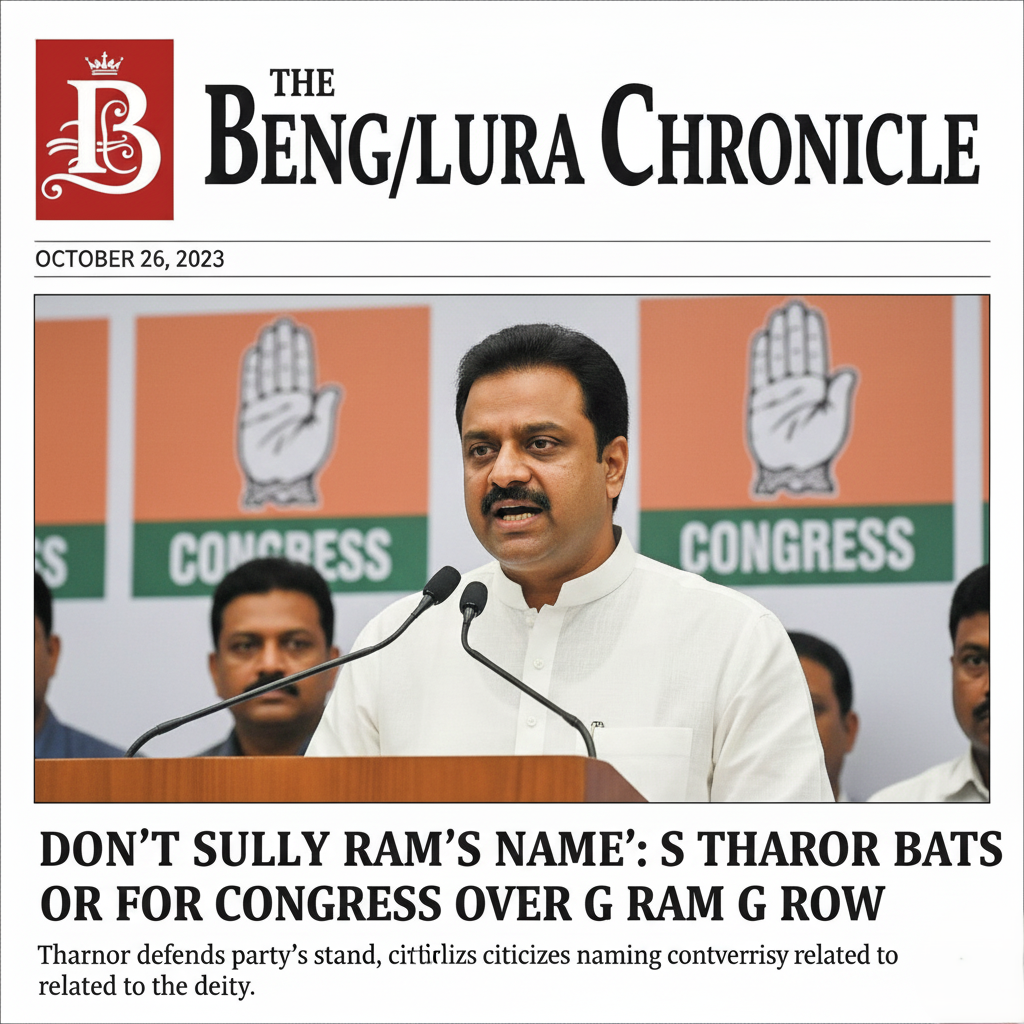
Senior Congress leader Shashi Tharoor has stepped in to defend his party amid a political controversy surrounding the “G Ram G” remark, urging critics not to drag religious sentiments into political discourse. Tharoor’s comments come as a response to mounting attacks on the Congress from rival parties, which have accused the party of being disrespectful towards Hindu beliefs and the legacy of Lord Ram.
Addressing the issue, Tharoor emphasised that Lord Ram is a unifying cultural and spiritual figure whose name should not be used to score political points. He warned against what he described as deliberate attempts to misrepresent the Congress party’s position and inflame religious sentiments for electoral gain.
Tharoor Calls for Restraint in Political Debate
Tharoor said that invoking the name of Lord Ram in a derogatory or provocative political context was inappropriate and deeply unfortunate. He stressed that faith should remain above partisan politics and should not be distorted to malign political opponents.
“Lord Ram belongs to all Indians,” Tharoor remarked, adding that reducing such a revered figure to a slogan or political weapon diminishes the values of tolerance, righteousness, and compassion traditionally associated with Ram.
Background of the Controversy
The controversy erupted following remarks and slogans linked to the phrase “G Ram G,” which opposition leaders alleged had religious undertones meant to mock or insult Hindu beliefs. The Bharatiya Janata Party seized on the issue, accusing the Congress of disrespecting Lord Ram and questioning the party’s commitment to Hindu sentiments.
Congress leaders, however, rejected these allegations, stating that the controversy was being manufactured by political rivals to divert attention from pressing governance issues. They argued that the party has consistently respected all faiths and upheld India’s pluralistic traditions.
Congress Pushes Back Against Allegations
Tharoor clarified that the Congress party’s ideology is rooted in secularism, which respects all religions without privileging or attacking any. He said the party has no history of insulting religious figures and accused its critics of twisting words and narratives to suit their political agenda.
The senior leader also highlighted that political discourse should focus on real issues such as employment, inflation, social harmony, and constitutional values rather than manufactured controversies.
Political Reactions and Public Debate
The remarks have triggered sharp reactions across the political spectrum. While Congress supporters welcomed Tharoor’s intervention as a balanced and principled stand, BJP leaders continued to criticise the party, insisting that religious sentiments must be handled with greater sensitivity.
Political analysts noted that the row reflects the broader trend of religion becoming central to political messaging, particularly in the run-up to key elections. They cautioned that such debates risk deepening social divisions if not handled responsibly.
Appeal for Inclusive Politics
Tharoor concluded his remarks by calling for maturity and responsibility in public life. He urged political leaders to respect the emotional and cultural significance of religious figures and refrain from exploiting faith for political advantage.
“India’s strength lies in its diversity and mutual respect,” he said, adding that preserving social harmony should be a shared responsibility across party lines.
Conclusion
As the “G Ram G” row continues to generate political heat, Shashi Tharoor’s comments reflect an attempt by the Congress to reframe the debate away from religious confrontation and towards inclusive, issue-based politics. Whether the appeal for restraint will cool tempers remains to be seen, but the episode once again highlights the sensitive intersection of religion and politics in India’s public discourse.