
































UNESCO Meet in India Concludes on December 13; China to Host ICH Panel Session Next Year
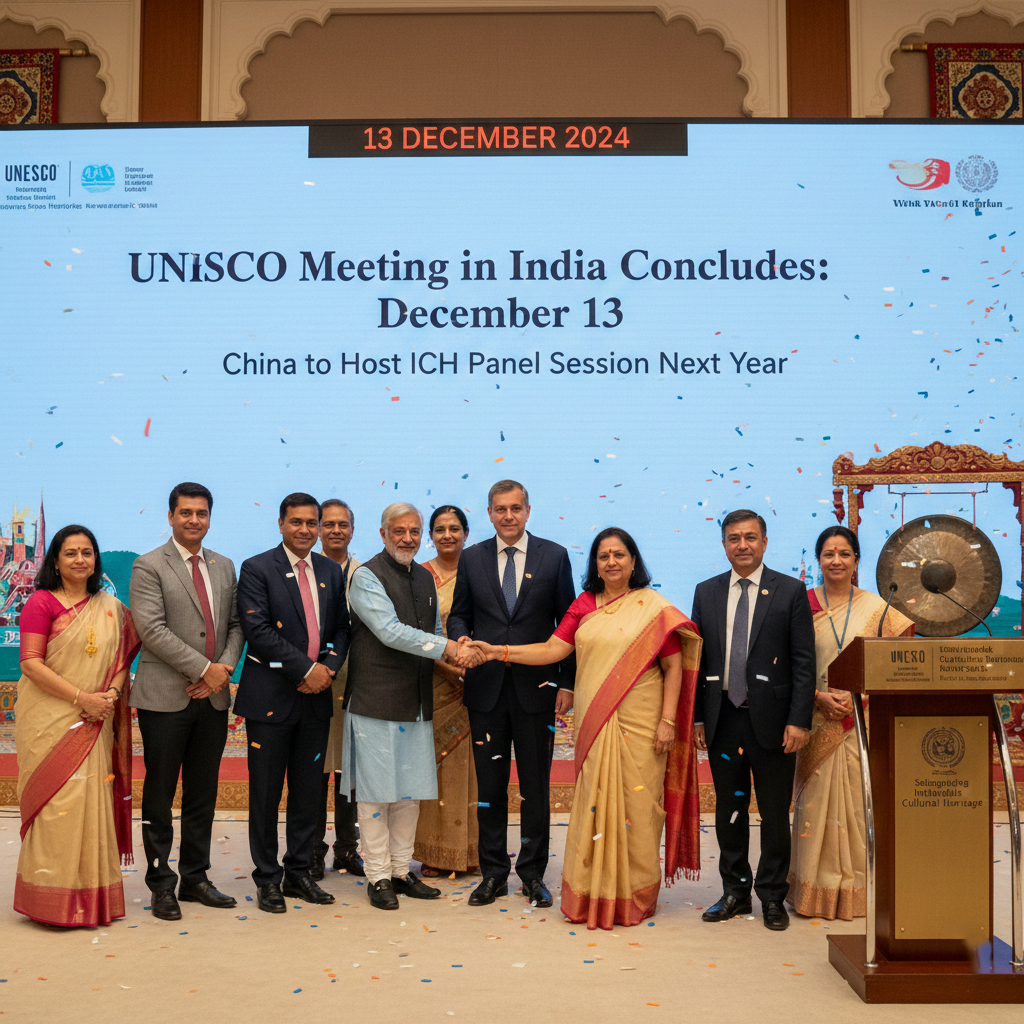
The UNESCO meet hosted by India concluded on December 13 with a formal closing ceremony held at the temporary pavilion in the Plenary Hall located within the historic fort complex. The multi-day international gathering brought together delegates, experts, and policymakers from across the world to deliberate on the protection, promotion, and preservation of cultural heritage, with a particular focus on intangible cultural heritage (ICH).
India’s hosting of the prestigious UNESCO event was widely viewed as a significant diplomatic and cultural milestone, reinforcing the country’s growing role in global cultural governance. The concluding session marked the end of days of intense discussions, policy exchanges, and technical deliberations on safeguarding traditions, practices, and expressions that form the living heritage of communities worldwide.
Focus on Intangible Cultural Heritage
Throughout the meet, delegates engaged in in-depth discussions on safeguarding intangible cultural heritage, including traditional knowledge systems, performing arts, rituals, craftsmanship, and oral traditions. Several countries presented case studies showcasing best practices in community-led conservation, while experts highlighted challenges such as rapid urbanisation, climate change, and cultural homogenisation threatening traditional practices.
India used the platform to showcase its vast and diverse intangible heritage, emphasising the importance of inclusive participation of local communities in preservation efforts. Cultural performances and exhibitions organised alongside the official sessions highlighted India’s living traditions and reinforced the link between heritage conservation and sustainable development.
China to Host ICH Panel Session Next Year
At the conclusion of the meeting, it was announced that China will host the next session of the Intangible Cultural Heritage (ICH) panel in 2026. The decision reflects UNESCO’s rotational hosting framework and underlines China’s expanding engagement in international cultural heritage initiatives.
The upcoming ICH panel session in China is expected to focus on reviewing new nominations for inclusion in UNESCO’s Intangible Cultural Heritage lists, assessing safeguarding measures submitted by member states, and strengthening international cooperation on heritage protection. Observers note that the session will play a key role in shaping global cultural policy priorities for the coming years.
Closing Ceremony and Delegates’ Engagement
The closing ceremony was hosted by India in the evening, bringing together senior officials, UNESCO representatives, and international delegates. Speakers acknowledged the constructive dialogue and collaborative spirit that marked the meeting. UNESCO officials praised India’s organisational efforts and hospitality, describing the meet as productive and forward-looking.
Following the formal conclusion, delegates were scheduled to participate in sightseeing activities, offering them an opportunity to experience India’s cultural landmarks firsthand. The cultural immersion was seen as a fitting end to a conference centred on heritage appreciation and global cultural exchange.
India’s Growing Cultural Diplomacy
India’s successful hosting of the UNESCO meet is seen as a boost to its cultural diplomacy and soft power outreach. Over recent years, the country has actively engaged with UNESCO on heritage conservation, education, and cultural promotion, while also securing recognition for several elements on UNESCO’s heritage lists.
Officials highlighted that such international platforms not only enhance global cooperation but also encourage domestic efforts to document and preserve traditional knowledge and cultural expressions at risk of fading away.
Looking Ahead
With the baton now passing to China for the next ICH panel session, UNESCO’s cultural heritage agenda is set to continue with renewed momentum. The outcomes of the India-hosted meet are expected to influence future policy frameworks, encourage cross-border collaboration, and reinforce the shared global responsibility of safeguarding humanity’s intangible cultural legacy.
As delegates depart following days of deliberation and cultural exchange, the meeting leaves behind a strong message: protecting living heritage is not just about preserving the past, but about empowering communities and strengthening cultural diversity for future generations.