


































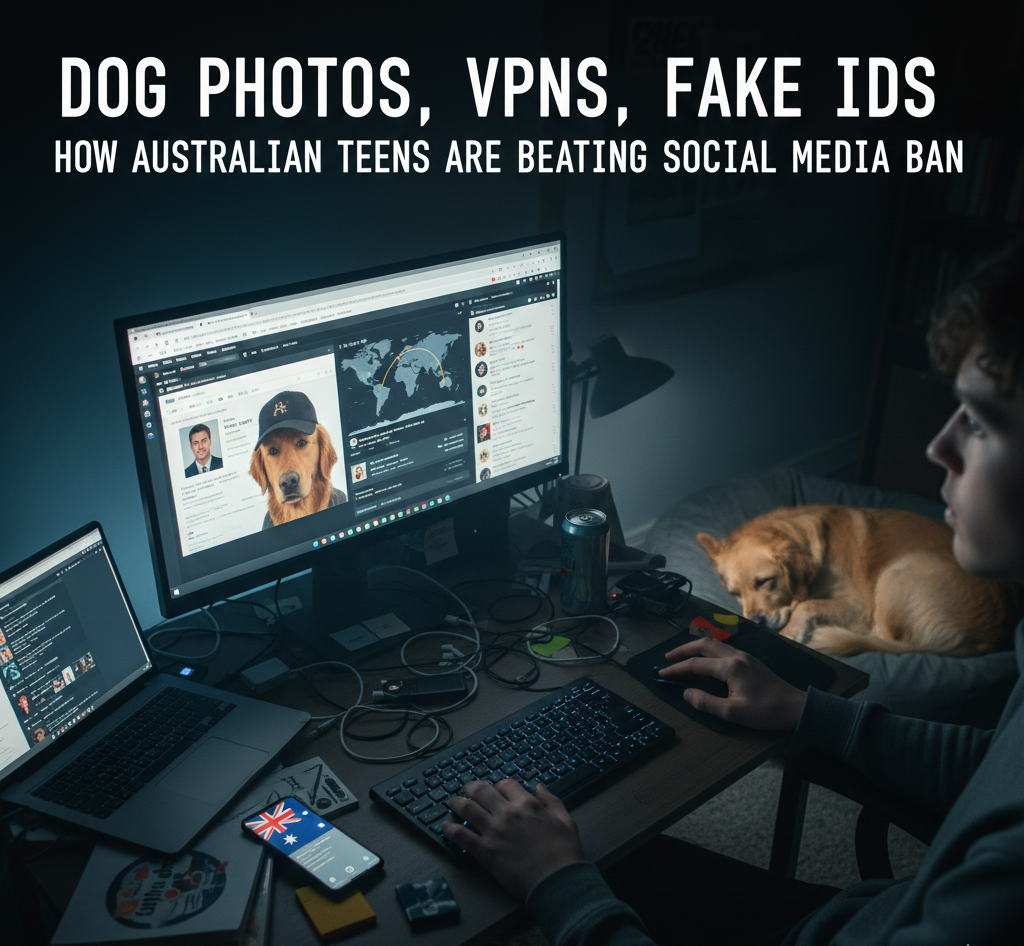
Dog Photos, VPNs, Fake IDs: How Australian Teens Are Beating the Social Media Ban
Australia recently implemented the Online Safety Amendment, banning users under 16 from major social media platforms including Instagram, TikTok, Snapchat, YouTube, and Facebook. While the law aims to protect minors online, many teens are finding creative ways to bypass the restrictions.
How Teens Are Bypassing the Ban
1. Using Dog Photos and Fake Profile Pictures
Some teens are reportedly using photos of dogs or other animals as profile pictures. In some cases, facial recognition systems mistakenly accept these photos as meeting age requirements.
2. Falsifying Birthdates and Using Fake IDs
Many young users simply enter a false date of birth to appear older. Others have resorted to fake ID verification to gain access.
3. Using VPNs and Alternate Login Methods
Virtual Private Networks (VPNs) help hide location and device information, allowing teens to bypass IP-based restrictions and geographic checks.
4. Using Adult Credentials
Some minors ask parents or older siblings to complete verification processes on their behalf, using adult credentials to maintain access.
5. Manipulating Facial-Age Verification Systems
Even systems designed to estimate age through selfies can be fooled. Some teens alter posture, use makeup, or adjust lighting to appear older than they are.
Why Enforcement Is Difficult
Age verification systems have margins of error that allow under-16 users to slip through.
Platforms differ in how strictly they enforce the rules, leading to inconsistent application.
VPNs, shared accounts, and parental involvement make full enforcement difficult.
Experts warn that while the ban aims to protect minors, it may inadvertently push them toward unsafe methods or alternative platforms, increasing exposure to scams or privacy risks.
What This Means
Australia’s social media ban represents a bold effort to protect children online, but the early success of teens in evading it shows that technology alone may not be sufficient. Without more sophisticated verification and monitoring, the situation could become an ongoing cat-and-mouse game between regulators and tech-savvy minors determined to stay connected.