


































Pathar Ka Gosht Recipe: Hyderabad’s Stone-Cooked Mutton That Redefines Slow Food
Pathar Ka Gosht is one of Hyderabad’s most iconic culinary treasures — a dish that beautifully blends history, technique and flavour. Traditionally cooked on a large slab of hot stone, this slow-cooked mutton delicacy delivers smoky aromas, tender meat and deep spices that food lovers crave. In 2025, as slow food culture gains popularity again, Pathar Ka Gosht is being celebrated for its earthy, ancient method of cooking.
What Makes Pathar Ka Gosht Special?
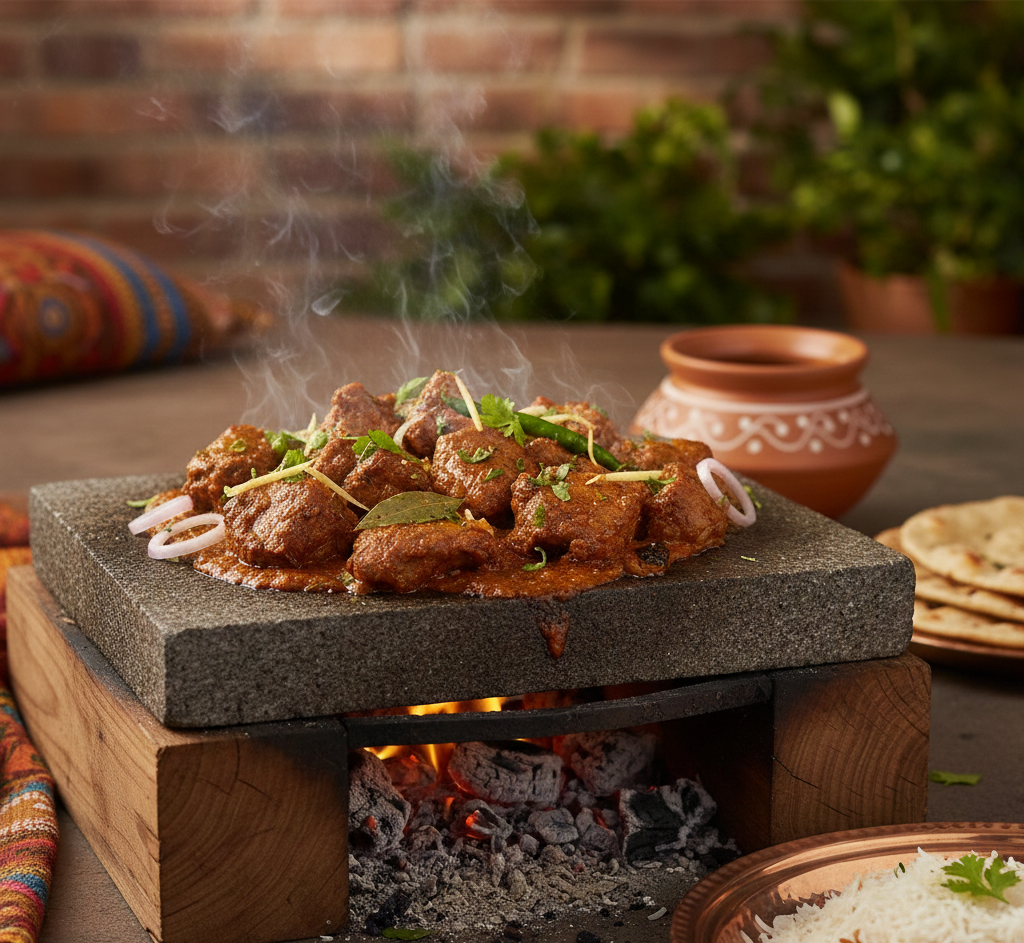
Unlike regular grilled or pan-fried mutton, this dish is cooked on a heated granite or basalt stone. The stone is placed over charcoal or fire until blistering hot, and the marinated meat is slowly cooked on its surface.
This technique:
Imparts a unique smoky, earthy flavour
Prevents burning due to stone heat retention
Helps the meat cook evenly and tenderly
Preserves moisture without oil
It’s simple yet refined — a true example of heritage cooking.
Ingredients (Serves 3–4)
For Marination
500g boneless mutton (thin slices)
1 tbsp ginger paste
1 tbsp garlic paste
1½ tsp red chilli powder
1 tsp black pepper powder
1 tsp cumin powder
1 tsp coriander powder
½ tsp garam masala
1 tbsp raw papaya paste (for tenderizing)
1 tbsp lemon juice
Salt to taste
2 tbsp hung curd (optional but adds richness)
For Cooking
1 large granite/basalt stone slab
Charcoal or high flame gas stove
1–2 tsp oil or ghee (optional)
How to Make Pathar Ka Gosht
1. Prepare the Meat
Cut the mutton into thin slices. This is crucial because Pathar Ka Gosht cooks directly on the stone — thick pieces won’t tenderize properly.
2. Marinate Generously
Mix all spices, pastes, curd and lemon juice.
Massage the marinade into the mutton thoroughly.
Cover and rest for:
At least 2–3 hours
Overnight for the best flavour
The raw papaya breaks down muscle fibres, giving that melt-in-the-mouth texture Hyderabadis swear by.
3. Heat the Stone
Traditionally, a stone slab is heated over charcoal until it’s extremely hot.
You’ll know it’s ready when:
Water droplets sizzle and evaporate instantly.
The surface turns slightly greyish due to heat.
You can also use a thick tawa on high heat if a stone is not available — but the authentic flavour comes only from basalt.
4. Cook the Mutton
Lightly grease the stone.
Place the marinated pieces on the hot surface.
Let them cook slowly, turning occasionally.
The meat will:
Caramelize beautifully
Absorb smoky stone flavours
Become tender without drying out
This takes around 15–20 minutes depending on slice thickness.
5. Serve Hot
Plate the mutton with:
Sliced onions
Lemon wedges
Mint chutney
A sprinkle of chaat masala or black pepper adds the final touch.
Tips for Authentic Pathar Ka Gosht
Use granite or basalt, not marble — marble cracks under heat.
Thin cuts help in even cooking.
Don’t rush — the essence of the dish lies in slow, mindful cooking.
Charcoal heat enhances authenticity.
Why Food Lovers are Returning to It in 2025
Pathar Ka Gosht fits perfectly into the slow-food revival. With people looking for regional, heritage-rich dishes, this centuries-old technique from Hyderabad’s Nizam era feels refreshing, grounding and deliciously nostalgic.
It’s more than a recipe — it’s a sensory experience and a reminder of how food was cooked before modern appliances.