



































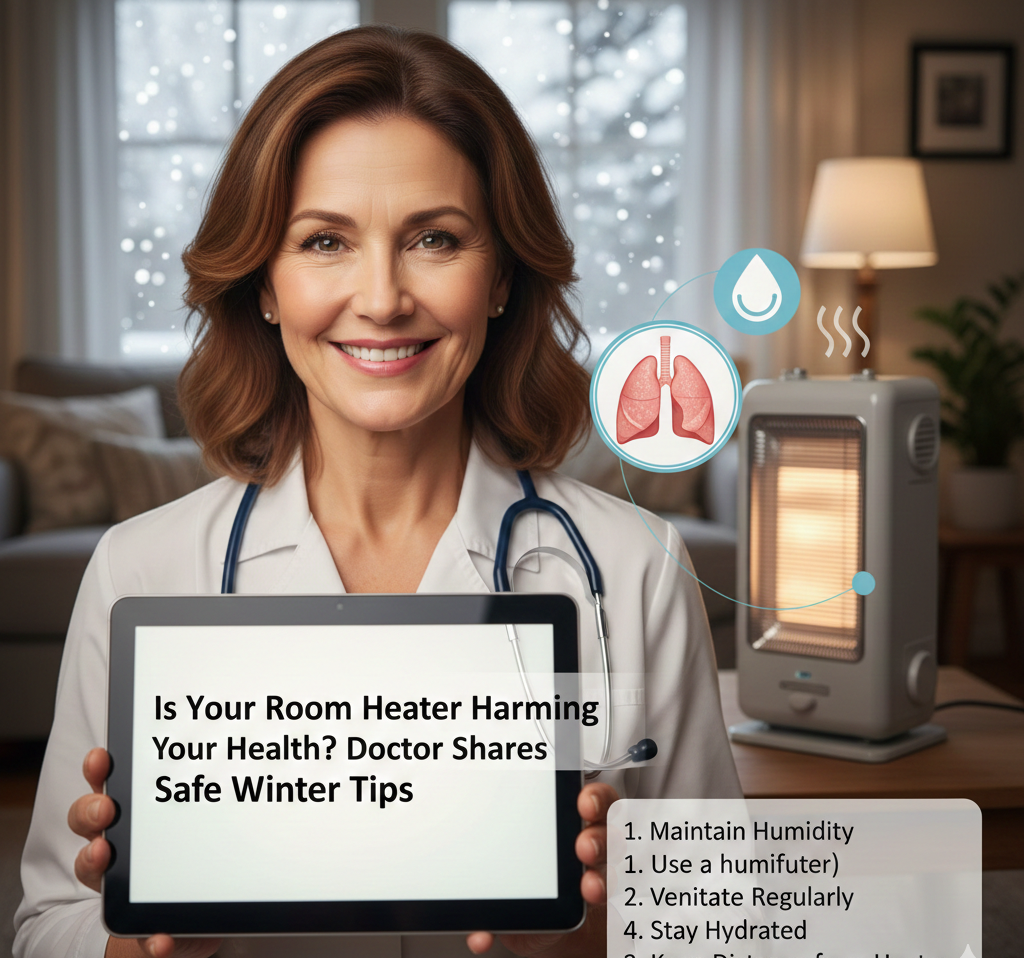
Is Your Room Heater Harming Your Health? Doctor Shares Safe Winter Tips (2025)
As temperatures drop, room heaters become a winter essential in many homes. But while they keep you warm, doctors warn that improper or excessive use can silently affect your health. From dry throat to headaches, from skin irritation to breathing trouble — heaters can create multiple indoor hazards if not used safely.
Here’s what doctors say you should watch out for, and how to stay warm without harming your health.
🔥 How Room Heaters Can Affect Your Health
1. Excessive Dryness in the Air
Most room heaters reduce humidity levels drastically. This can cause:
Dry skin
Cracked lips
Itchy or red eyes
Dry throat and coughing
Low humidity can also worsen sinus problems and asthma symptoms.
2. Carbon Monoxide Risk (for Gas/Propane Heaters)
Gas-based heaters used in poorly ventilated rooms can lead to:
Headaches
Dizziness
Confusion
Breathlessness
In extreme cases, carbon monoxide buildup can be dangerous. Electric heaters do not produce CO, but they still require safe handling.
3. Sleep Disturbances
Sleeping with a heater on for long hours may:
Reduce oxygen levels
Make the room excessively dry
Cause morning headaches and heaviness
Doctors recommend avoiding continuous overnight use.
4. Worsening of Asthma and Allergies
Heaters blow warm air, which can circulate:
Dust
Pollen
Pet hair
This may trigger sneezing, chest tightness, or allergy flare-ups — especially in children and elderly people.
5. Dehydration
Constant heater exposure can dehydrate your body without you realising it, leading to:
Fatigue
Dry mouth
Increased thirst
Reduced skin moisture
6. Fire and Burn Risks
Heaters kept too close to furniture, curtains, or bedding can be a fire hazard. Young children may also accidentally touch hot surfaces.
🩺 Doctor-Recommended Tips for Safe Heater Use
1. Keep a Bowl of Water in the Room
A simple trick — placing a bowl or mug of water near the heater helps maintain humidity and reduce dryness.
2. Use a Humidifier
If your home becomes too dry, use a humidifier to maintain healthy moisture levels. Ideal indoor humidity: 40–60%.
3. Avoid Keeping the Heater On All Night
Switch it off after the room becomes warm. Use:
A hot water bag
A warm blanket
Thermal wear
This prevents overnight dryness and oxygen depletion.
4. Maintain Ventilation
Keep a small window or vent slightly open. Fresh air circulation reduces dryness and prevents gas accumulation.
5. Keep Safe Distance
Ensure your heater is at least 3–4 feet away from:
Curtains
Bedsheets
Clothing
Furniture
This lowers fire risk.
6. Moisturise Often
Apply:
Moisturiser
Lip balm
Nasal saline gel
This protects skin and nasal passages from dryness.
7. Stay Hydrated
Drink enough water during winter, even if you don’t feel thirsty. Warm water or herbal teas can help.
8. Clean the Heater Regularly
Dust buildup in the heater can cause burning smells and irritate the lungs. Clean filters and surfaces frequently.
9. Prefer Oil-Filled Radiators (OFRs)
OFRs are safer than coil or fan heaters because:
They do not burn oxygen
They do not overly dry the air
They maintain uniform warmth
🏥 Who Should Be Extra Careful?
Room heater risks are higher for:
Babies and toddlers
Senior citizens
People with asthma or allergies
People with sinus issues
Individuals with dry skin conditions
These groups should avoid prolonged heater exposure.
🌡 The Bottom Line
Room heaters are safe when used wisely. The key is moderation, ventilation, and moisture control. With simple adjustments, you can enjoy warm, comfortable winters without compromising your health.