


































China Executes Ex-Banker for Taking Over $156 Million in Bribes (2025)
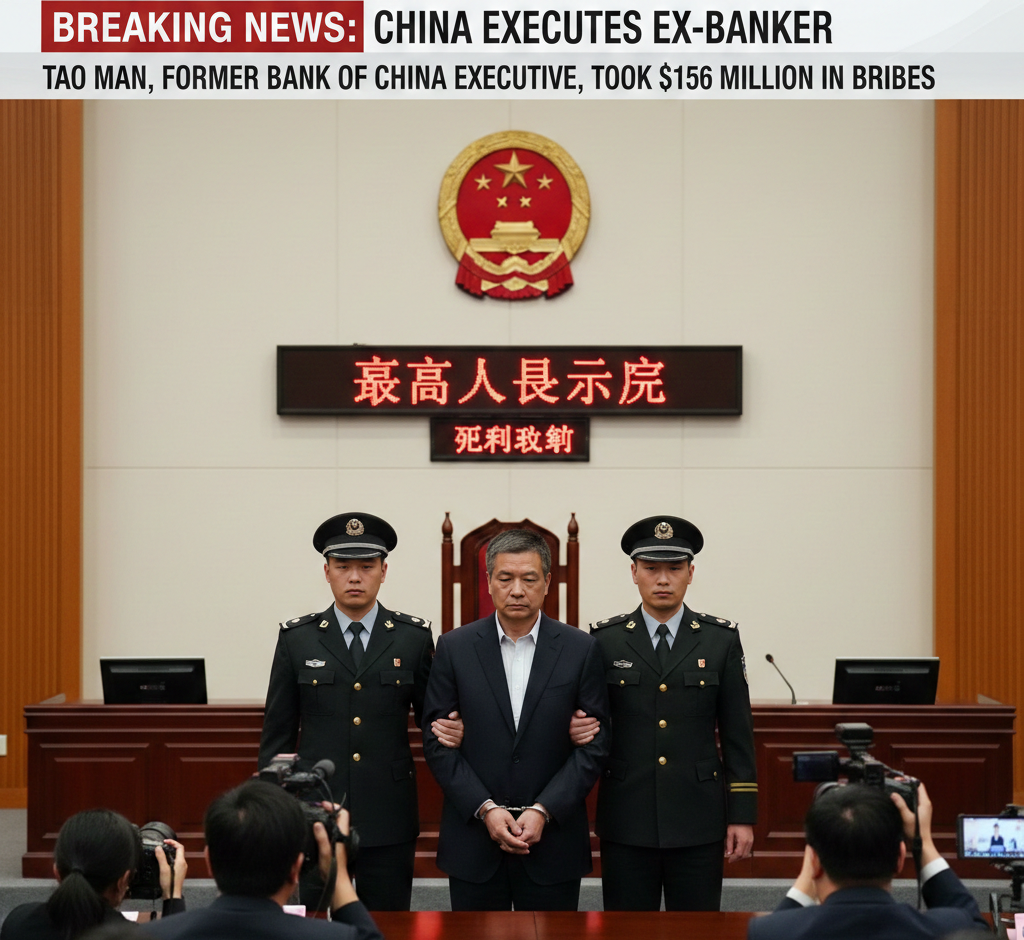
In one of the harshest anti-corruption punishments seen in years, China has executed Bai Tianhui, a former senior banker accused of accepting more than 156 million dollars in bribes. The case has drawn global attention for both the scale of misconduct and the severity of the sentence, underscoring China’s uncompromising stance on high-level financial crimes.
Who Was Bai Tianhui?
Bai Tianhui served as the general manager of China Huarong International Holdings, a major offshore subsidiary of China Huarong Asset Management. Huarong is one of China’s largest state-owned asset managers, responsible for handling distressed debt and stabilising the financial system.
During his tenure, Bai was responsible for major project evaluations, financing decisions, and corporate acquisitions — authority he allegedly exploited for massive personal gain.
The Bribery Scheme: A Multi-Year Operation
Investigations revealed that Bai accepted bribes over several years, helping certain companies secure favorable deals, project approvals, and financial advantages. Prosecutors argued that:
Bai’s corruption severely damaged state financial interests
He abused his power to influence major business decisions
His actions contributed to long-term financial risks for the company
The total bribe amount exceeded one billion yuan, equivalent to more than 156 million dollars.
The Trial and Sentencing
Bai’s trial moved quickly due to what the court described as “clear facts, sufficient evidence, and extraordinary severity.” A court in Tianjin sentenced him to death, confiscated all his personal assets, and stripped him of political rights for life.
Although he appealed, higher courts upheld the sentence, stating that the enormous bribe amount and the deep harm caused to national interests justified the death penalty. Before the execution, Bai was allowed to meet close family members — a standard procedure in such cases.
Part of a Larger Crackdown on Financial Corruption
Bai’s case is not an isolated incident. China has been running a sweeping anti-corruption campaign targeting:
State-owned financial institutions
Banking executives
Asset management firms
Senior government-linked officials
The financial sector, considered highly vulnerable to abuse of authority, has been under intense scrutiny.
Several other former executives from Huarong have previously faced investigations, prosecutions, and severe penalties. China’s leadership views corruption in financial governance as a direct threat to economic stability.
Why the Death Sentence Matters
Execution for white-collar crimes is rare globally but not unprecedented in China. In Bai’s case, the court’s justification reflected:
The “extraordinary scale” of the bribery
The “extremely harmful impact” on public resources
The symbolic importance of deterring future corruption
The decision signals that even senior financial leaders are not immune to the harshest punishments if found guilty of graft.
A Warning to the Financial Sector
Bai’s execution sends a strong message across China’s banking and investment landscape: corruption will be met with swift, uncompromising action. As China navigates debt pressures, slowing growth, and financial risks, the government is expected to intensify its oversight on:
Asset management companies
High-value mergers and acquisitions
Large-scale investment decisions
Cross-border financial operations
Insiders believe more investigations are underway, and additional high-profile arrests may follow.