




















As PM Initiates Vande Mataram Debate, A Look At the Row Over the 150-Year-Old Song | 2025
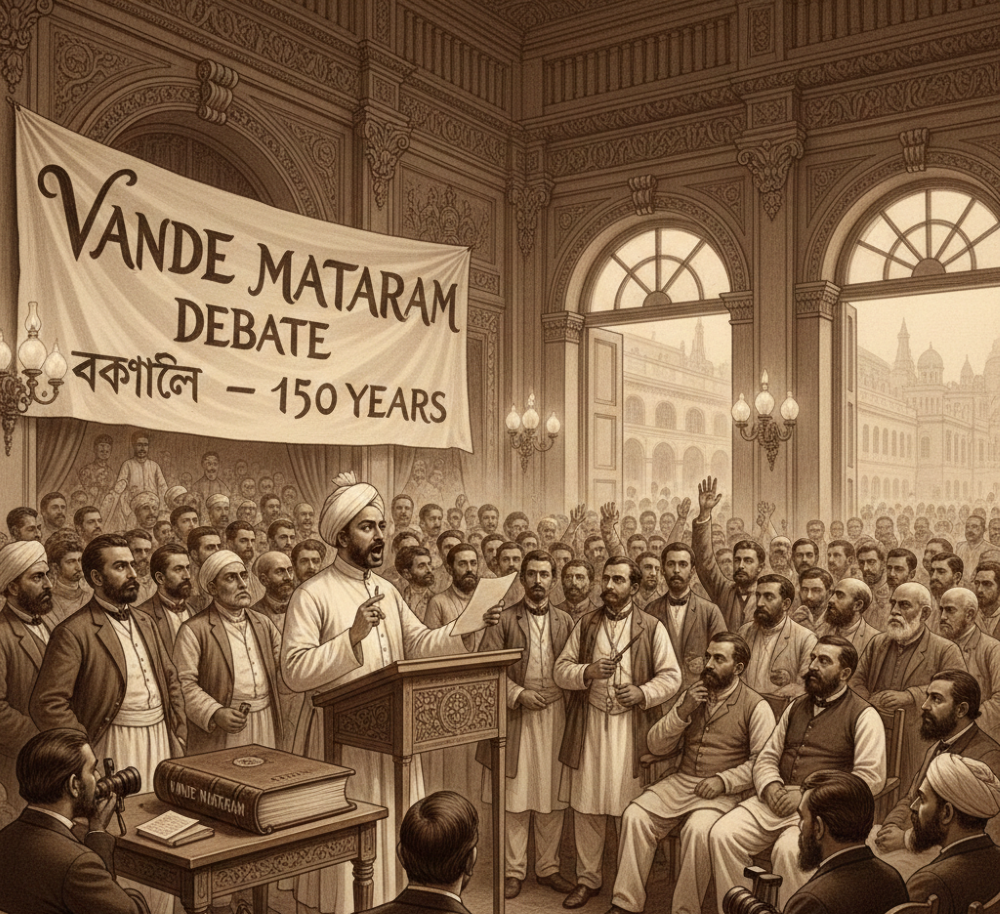
A fresh national debate erupted in 2025 after the Prime Minister revisited the long-standing discussion surrounding “Vande Mataram,” the iconic 150-year-old song that has shaped India’s nationalist identity. His remarks in Parliament and subsequent public addresses reopened conversations about the anthem’s place in modern India, cultural sensitivities, and its historical legacy.
Why the Debate Returned in 2025
During a recent event, the PM emphasized the need to “revisit and reclaim” Vande Mataram as a unifying national symbol. While he praised the song’s role in the freedom struggle, he also questioned why it continues to spark controversy more than a century later. His statements instantly triggered conversations across political circles, digital platforms, and academic forums.
Opposition parties accused the government of attempting to “polarise with cultural symbolism,” while supporters argued the PM is encouraging Indians to appreciate a historic national treasure.
The 150-Year Journey of ‘Vande Mataram’
Written in 1870 by Bankim Chandra Chattopadhyay and included in his novel Anandamath in 1882, the song quickly became a rallying cry during India’s independence movement. Freedom fighters sang it during protests, marches, and underground meetings.
Key historical milestones:
It was adopted as the national song of India in 1950.
The Constituent Assembly decided that only the first two stanzas—which are secular in nature—would be officially recognized.
Debates over its religious imagery date back to the early 20th century.
Why ‘Vande Mataram’ Has Faced Objections
The controversy largely stems from the song’s later stanzas, which personify the nation as a goddess, using imagery linked to Hindu traditions. Some communities feel this conflicts with their religious beliefs and the secular ethos of the Constitution.
Common points of contention:
Non-Hindu groups argue that the song’s devotional tone makes it unsuitable for mandatory singing.
Supporters view it as a symbol of patriotism, not religion.
Courts have repeatedly clarified that no Indian can be forced to sing it.
What the PM Said in 2025
The PM remarked that the country must “rise above old divisions” and “embrace Vande Mataram as a celebration of Bharat Mata.” He argued that its imagery reflects cultural heritage rather than religious favoritism. His detractors, however, believe this rhetoric could pressure institutions into enforcing the song.
The debate comes at a time when national identity, cultural revival, and historical narratives are key political themes in 2025.
Political and Social Reactions
Government Allies
Hailed the PM’s remarks as “clarifying and uplifting.”
Called for teaching the full history of the song in schools.
Opposition Parties
Accused the government of reviving a divisive debate ahead of major elections.
Warned against “cultural imposition.”
Civil Society & Academics
Mixed reactions: some praise renewed attention to history; others fear marginalization of minority voices.
Why the Song Still Matters in 2025
“Vande Mataram” continues to hold emotional significance because it symbolizes resistance, unity, and sacrifice. But in a diverse nation like India, cultural symbols often spark debate over inclusion and representation.
In 2025, as India balances tradition with modern pluralism, the conversation around Vande Mataram highlights deeper questions:
How should India preserve its cultural heritage?
What symbols can unify a diverse population?
Should patriotic expressions be personal choices or collective expectations?
Looking Ahead
The renewed focus on the 150-year-old song has sparked discussions across schools, political parties, and public forums. Whether this leads to consensus or further contention will depend on how sensitively leaders handle the narrative.
For now, the Vande Mataram debate in 2025 underscores that India’s cultural symbols remain powerful—and contested—forces in shaping national identity.