
























After Goa Nightclub Fire: What Travellers Must Check Before Visiting Clubs (2025 Guide)
The tragic Goa nightclub fire, which resulted in multiple casualties and widespread shock, has once again highlighted a critical truth: safety is not optional. Whether you’re travelling for leisure, attending parties, or exploring nightlife destinations in India or abroad, it’s essential to prioritize your own safety before stepping into any club or entertainment venue.
Nightlife is meant to be fun, energetic, and carefree—but that doesn’t mean careless. Here are the most important checks every traveller must make before entering a nightclub.
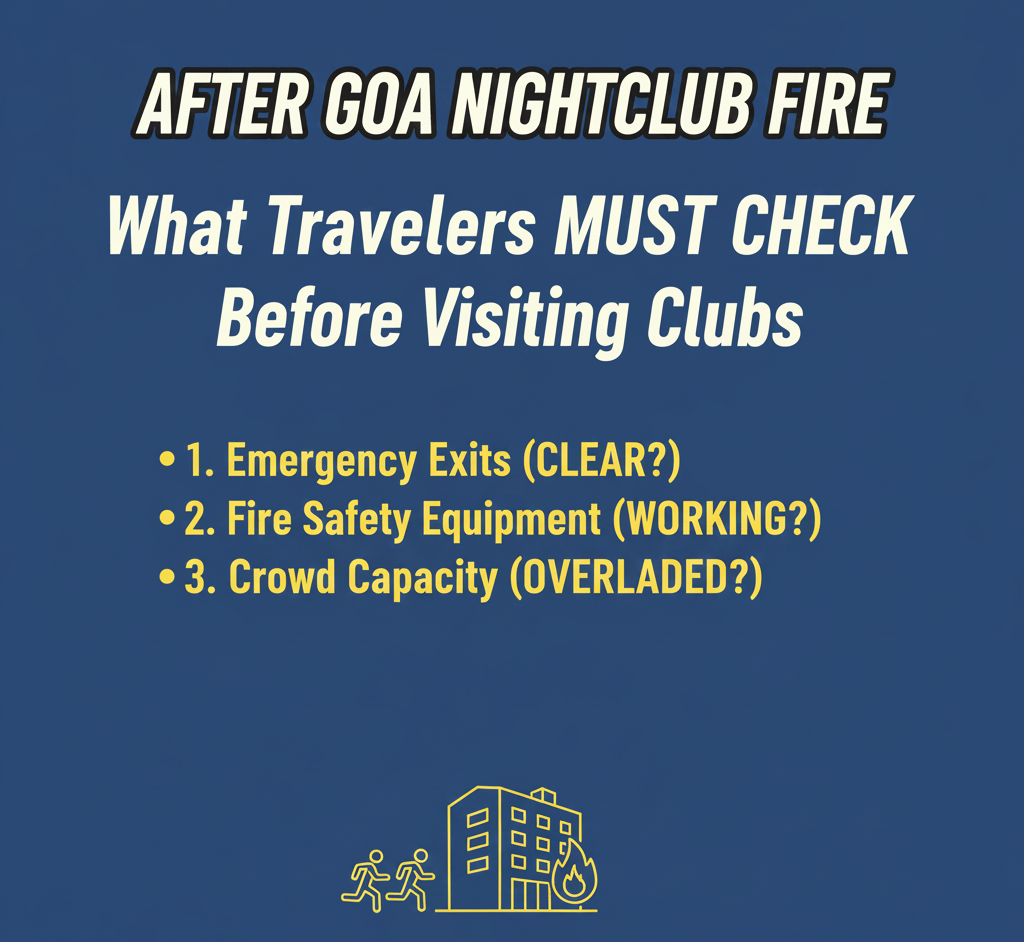
1. Examine the Building’s Structure and Layout
Many recent fire incidents have been linked to poorly constructed or illegally modified buildings.
✔️ Check for visible exits
A responsible club will have clearly marked and well-lit emergency exits. If you don’t see at least two exits from where you stand, that’s the first red flag.
✔️ Avoid basement clubs with no ventilation
Enclosed underground spaces trap smoke and increase the risk of suffocation during emergencies.
✔️ Crowd density matters
If a place seems overcrowded beyond capacity, leave. Overcrowding not only reduces comfort but also makes evacuation extremely difficult.
2. Look for Valid Licenses and Compliance Displays
Most safe clubs display these documents near the entrance:
Fire safety certificate
Occupancy limit certificate
No Objection Certificate (NOC) from the Fire Department
Business and liquor licenses
If the club doesn’t display them—or refuses to show them—it’s a warning sign.
3. Fire Safety Equipment: A Must-Check
Before you settle in, observe whether the club has:
✔️ Fire extinguishers placed at intervals
✔️ Sprinkler systems installed on ceilings
✔️ Fire alarms and smoke detectors
✔️ Emergency lighting
If you don’t see any of these, the venue may not be disaster-ready.
4. Beware of Fire Hazards Inside
The Goa incident once again proved how dangerous indoor fireworks and pyrotechnics can be.
Avoid clubs where:
Staff light crackers, flare guns, or fireworks inside
Fire dancers or performers work in enclosed areas
Decoration material looks flammable (foam, low-grade wood, synthetic cloth)
Even a small spark can trigger a tragedy when the venue is packed.
5. Ask About the Emergency Plan
You have every right to ask simple questions like:
“Do you have a fire evacuation plan?”
“Where is the nearest emergency exit?”
“Is there a first-aid team or security trained in emergencies?”
A reputable club will answer confidently.
6. Security Presence and Management
Strong security usually indicates responsible management.
✔️ Bouncers should be trained and organized
✔️ Staff should not be intoxicated
✔️ Entry checks should be systematic
✔️ Staff must know how to guide people during emergencies
If security appears careless or untrained, reconsider entering.
7. Read Reviews and Recent Visitor Feedback
Before visiting a club in any city, check:
Google reviews (especially recent ones)
Local news related to the place
Travel forums
Social media check-ins
Signs of previous violations or complaints should alert you.
8. Stay Alert Inside the Club
Once inside, keep the following in mind:
Always identify at least two exits
Avoid sitting too far from an exit
Don’t block your escape route with bags or coats
If you smell smoke, see sparks, or hear unusual noises—leave immediately
Your instincts may save your life.
9. Alcohol Awareness = Safety
Many tragedies worsen because people are too intoxicated to react properly.
Drink in moderation
Keep your group together
Assign a sober buddy if possible
Stay aware of your surroundings
10. For International Travel: Know Local Safety Standards
Countries like the UAE, Singapore, and most of Europe have strict nightlife regulations.
Others may not.
Before entering a foreign nightclub, check:
Local fire safety norms
Reputation of the nightclub
Emergency numbers and embassy contacts
Final Thoughts
Nightclubs are meant to be enjoyable spaces—but fun should never come at the cost of safety. The Goa nightclub fire serves as a painful reminder that tragedies often happen due to negligence, overcrowding, or poor safety standards.
As a traveller, the simplest precautions can make the biggest difference.
Your life is more important than any party.