































Ujjain’s Spiritual Cruise: Water Transport to Link Key Temples for Simhastha 2028
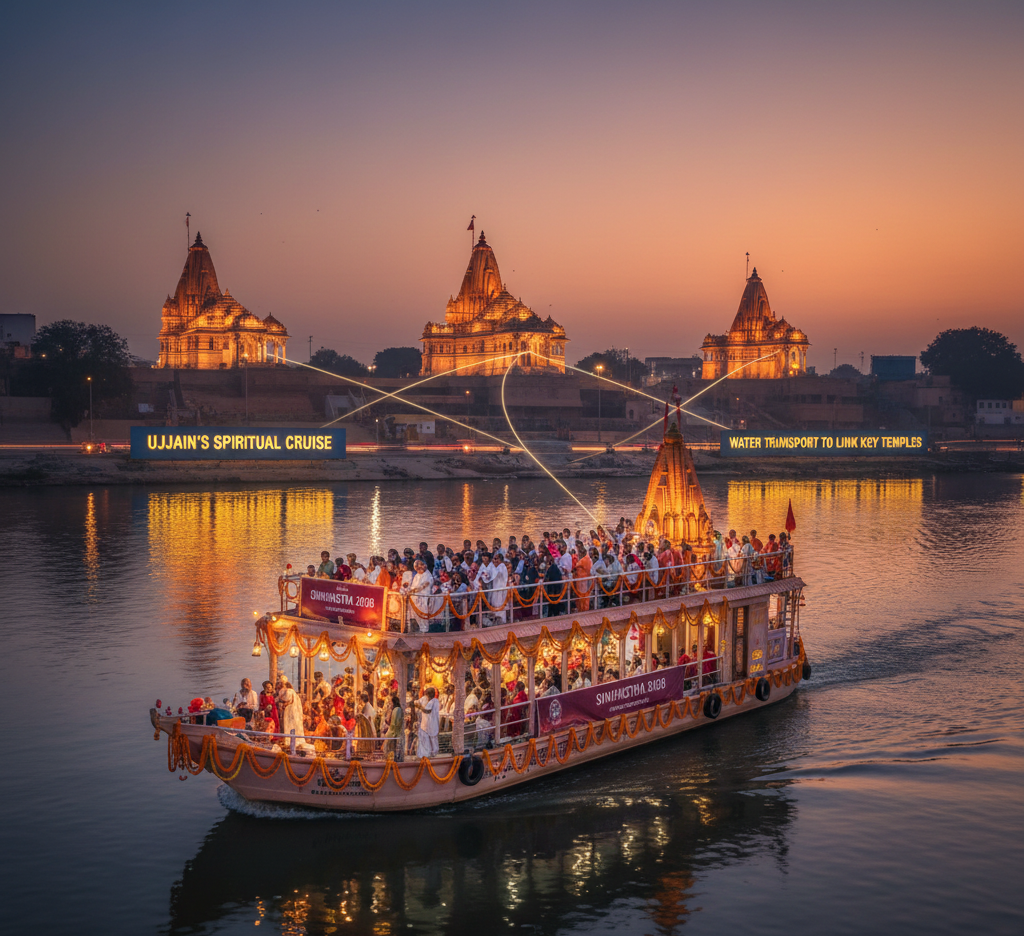
Ujjain, one of India’s most sacred pilgrimage cities, is preparing for a major transformation ahead of Simhastha 2028. In a visionary move blending spirituality, tourism, and sustainable transport, authorities have announced plans for a “spiritual cruise” waterway system that will connect key temples along the Kshipra River, offering pilgrims a peaceful and divine travel experience.
The project is set to become one of the most unique religious mobility initiatives in India.
A New Way to Experience Ujjain’s Spiritual Heritage
Simhastha, held once every 12 years, attracts millions of devotees from across the world. With massive crowds expected in 2028, the government aims to introduce a river-based transport network that reduces road pressure and enhances the pilgrimage experience.
What the Spiritual Cruise Offers
A serene, slow-paced journey on the Kshipra River
Direct connectivity to major ghats and temples
Reduced traffic congestion around the temple corridors
A visually immersive spiritual atmosphere
Eco-friendly mobility with minimal pollution
The cruises are expected to be electrically powered or hybrid models, ensuring minimal environmental impact.
Key Temples to Be Connected
The water transport project will link several major religious spots, including:
Mahakaleshwar Temple
Harsiddhi Mata Temple
Ram Ghat
Kala Bhairav Temple
Mangalnath Temple
Sandipani Ashram (nearest accessible point)
Pilgrims will be able to move between temples without battling road congestion or long queues of vehicles.
Why Water Transport Is a Game-Changer for Simhastha 2028
Ujjain typically faces traffic, crowd management, and mobility challenges during Simhastha. Introducing a river cruise system helps solve several issues at once.
Major Advantages
1. Smoother Crowd Management
Diverting lakhs of pilgrims to water routes will ease pressure on narrow city roads.
2. Scenic and Devotional Atmosphere
Cruise routes will include devotional music, guided commentary, and views of ancient ghats.
3. Environment-Friendly Mobility
Electric or low-emission vessels will reduce carbon footprints during the massive influx of pilgrims.
4. Promoting Religious Tourism Beyond Simhastha
The system is expected to become a year-round attraction even after the festival ends.
Infrastructure Development Underway
To support the spiritual cruise system, Ujjain is undergoing major upgrades:
New jetties and floating pontoons at major ghats
Beautification of riverfronts
LED lighting and digital information screens
Dredging and strengthening the waterway
Improved access roads leading to boarding points
Officials say the project will not only modernize mobility but also uplift Ujjain’s cultural landscape.
Pilgrim Experience in 2028
The spiritual cruise will offer an experience combining tradition and modernity:
Arti-viewing decks for witnessing evening rituals
Onboard commentary about Ujjain’s ancient history
Quiet zones for meditation and chanting
Special “Mahakal Cruise” themed around the 12 Jyotirlingas
Affordable ticket slabs for all categories of pilgrims
During peak Simhastha days, the service will run nearly round the clock.
A Vision for the Future
Ujjain’s water transport initiative reflects a new era in spiritual infrastructure—one that respects faith while embracing technology and sustainability. If executed successfully, it could become a model for religious tourism across India, especially in cities like Varanasi, Ayodhya, Haridwar, and Nashik.
As the countdown to Simhastha 2028 begins, Ujjain is positioning itself not just as a city of temples, but as a global spiritual destination with modern mobility solutions at its heart.