

































Transport Ministry Orders Strict Action Against Roadside Parking: A Major Crackdown in 2025
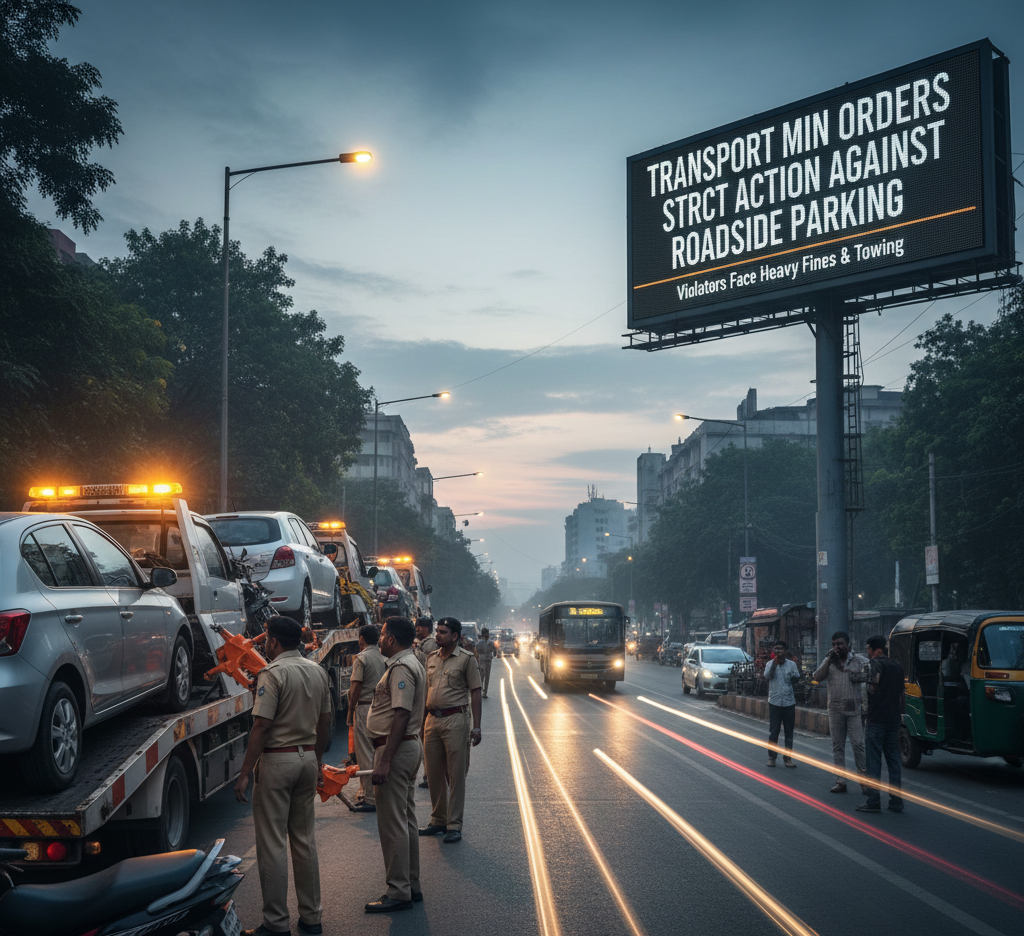
The Transport Ministry has issued a strong directive in 2025, ordering strict action against illegal roadside parking, a problem that has become one of the biggest causes of traffic congestion, road accidents, and slow urban mobility in India. With growing vehicle numbers and shrinking road space, the government aims to introduce a zero-tolerance policy on wrongful parking across major cities and highways.
Why the Crackdown Was Needed
Across metros and Tier-2 cities, illegal parking has reached alarming levels. Vehicles occupy footpaths, block service lanes, choke busy intersections, and reduce usable road width by up to 30–40% in some areas.
Key Problems Caused by Roadside Parking
Severe traffic jams, especially during peak hours
Delays in emergency services such as ambulances, fire vehicles, and police units
Higher road accident risks because of sudden lane changes
Blocked pedestrian pathways, forcing people to walk on the road
Slower public transport, including buses and autos
Increased pollution due to idling vehicles
The ministry highlighted that without strong enforcement, India’s transportation efficiency and urban planning goals cannot be achieved.
New Measures Announced by the Transport Ministry
The 2025 directive includes multiple steps designed to create discipline, improve safety, and free up road space.
1. Heavy Penalties for Illegal Parking
Fines will be significantly increased for cars, two-wheelers, autos, and commercial vehicles found blocking public roads.
2. Rapid Towing and Impound Action
Municipal bodies and traffic police have been instructed to:
Deploy 24×7 towing vehicles
Impound repeat-offender vehicles
Create digital logs of violations
3. Smart Parking Systems
The ministry is pushing for:
App-based parking
Sensors to detect illegal parking
Digitized challans and instant notifications
4. Dedicated No-Parking Zones
Schools, markets, hospitals, and government buildings will have strictly demarcated zones where parking will be fully prohibited.
5. Encouragement of Public Parking Infrastructure
Local authorities must create:
Multilevel parking lots
Off-street parking areas
Pay-and-park zones with transparent pricing
Impact Expected in 2025
Authorities hope the campaign will:
Reduce congestion by 20–30% in busy corridors
Improve traffic flow and speed
Enhance road safety
Support smoother movement of emergency vehicles
Improve air quality by cutting idle-time emissions
Citizens and urban planners believe that if properly implemented, the crackdown could be a major turning point in India’s urban mobility.
Public Response
While many commuters support the initiative, some drivers fear excessive towing or insufficient parking facilities. The ministry clarified that enforcement will be paired with infrastructure development to ensure fair implementation.
Conclusion
The Transport Ministry’s strict action against roadside parking marks a bold move toward cleaner, safer, and more efficient roads in 2025. With stronger laws, smart enforcement, and better infrastructure, the government hopes to transform urban traffic management and ensure smoother mobility for millions.